Your Guide to Exercise Bikes and Indoor Cycling
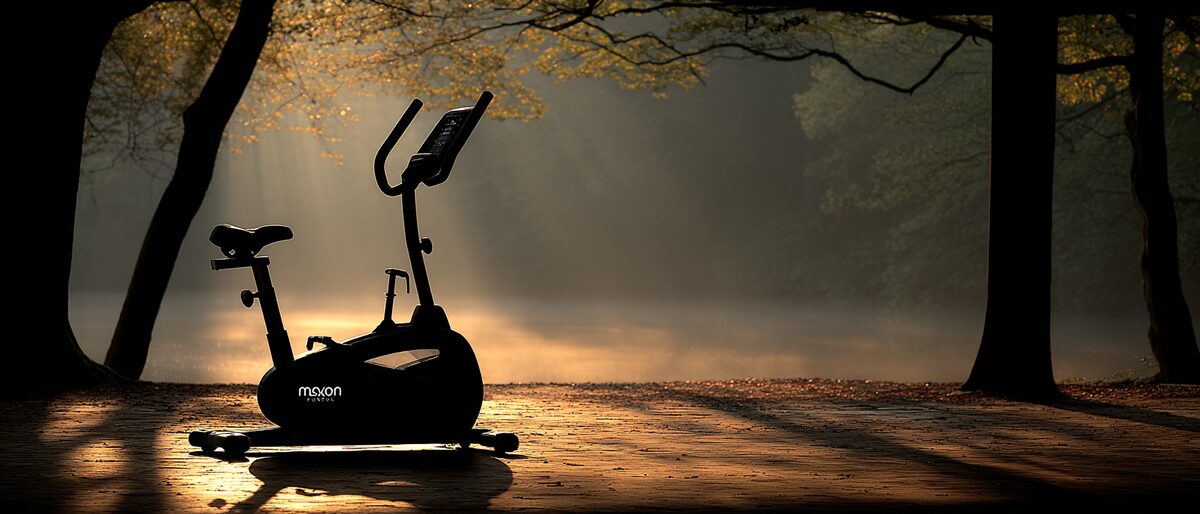
An exercise bike is one of the gentlest ways to get a serious workout. Low impact, adjustable intensity, and usable in any weather — it is the piece of cardio equipment that people tend to stick with longest. But the range has grown confusing. Upright bikes, recumbent bikes, spin bikes, air bikes, smart bikes with screens bigger than some televisions, and folding bikes that promise to disappear into a cupboard. This guide cuts through the noise, explains what each type actually does well, and helps you choose one that suits how you really live and train.
Browse Running Shoes on Amazon
Every button routes to your local Amazon store automatically
Why Exercise Bikes Work
Cycling is inherently kind to the body. Your weight is supported by the saddle, so the impact on your knees, hips, and ankles is a fraction of what you experience running. This makes an exercise bike accessible to people across a wide range of ages, weights, and physical conditions — including people recovering from injury or managing joint problems.
At the same time, cycling can be ferociously hard work if you want it to be. A thirty-minute spin class or a high-intensity interval session on an air bike will challenge the fittest athlete. The same machine that gently rehabilitates a knee can push a trained cyclist to their cardiovascular limit. Very few pieces of equipment span that range.
Exercise bikes are also among the easiest fitness equipment to use consistently. There is no technique to learn, no form to master, and no risk of falling off (barring extraordinary circumstances). You sit down, pedal, and adjust the resistance to suit your effort level. This simplicity translates directly into adherence — and adherence is what produces results.
Types of Exercise Bike — A Clear Breakdown
The exercise bike market has split into distinct categories, and understanding which is which saves a lot of confusion.
Upright Bikes
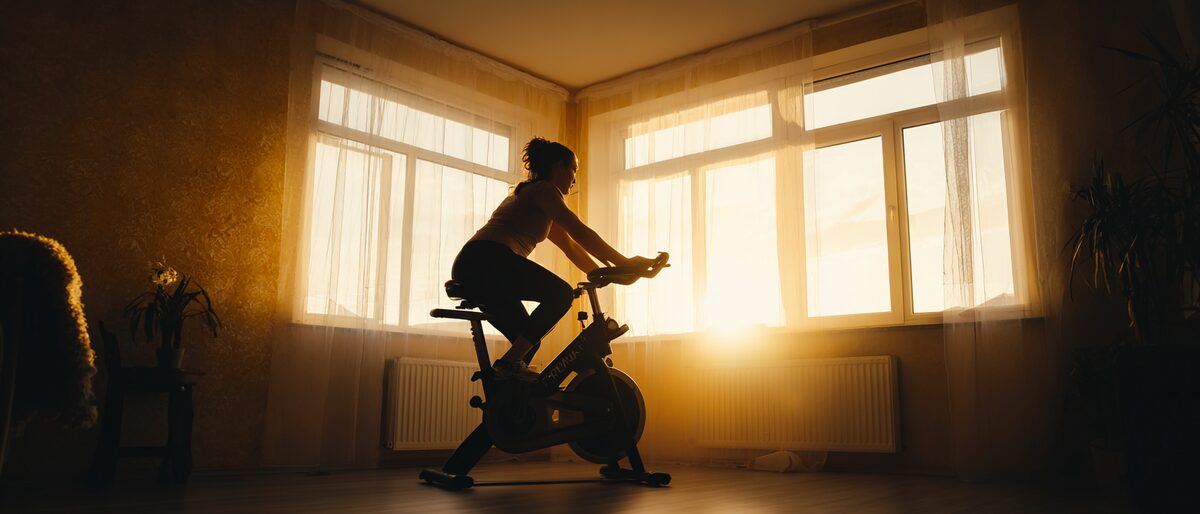
The classic exercise bike. You sit in an upright position, much as you would on a standard bicycle, with the pedals directly below you. Upright bikes are compact, relatively affordable, and suit gentle to moderate-intensity workouts.
Most upright bikes have a small console displaying speed, distance, time, and calories. Resistance is usually magnetic, adjusted by pressing buttons on the console. Some models fold or have a small enough footprint to fit comfortably in a living room or bedroom.
Upright bikes are a strong choice if you want reliable, comfortable cardio without the intensity of a spin setup. They are also the most common type used in rehabilitation settings — a reflection of their gentle, accessible nature.
The main limitation is that they tend to feel quite different from road cycling. The riding position is more upright, the pedalling resistance is even and predictable, and the overall feel is more "fitness equipment" than "bicycle." For dedicated cyclists looking to replicate the road experience indoors, a spin bike or turbo trainer is a better match.
Recumbent Bikes
Recumbent bikes put you in a semi-reclined position with a full backrest and the pedals out in front of you rather than below. This is the most comfortable exercise bike configuration by a significant margin.
The backrest supports your lower back, the seat is wider and more padded than an upright saddle, and the riding position places minimal stress on the wrists, shoulders, and neck. Getting on and off is easier too — there is no swinging a leg over a saddle — which matters for anyone with hip restrictions or balance concerns.
Recumbent bikes are excellent for rehabilitation, for people with back pain, and for longer sessions where comfort matters more than intensity. They are popular in physiotherapy and among older adults, and for good reason.
The trade-offs: they are physically larger than upright bikes, taking up more floor space. The intensity ceiling is lower — the reclined position limits how hard you can push. And they look and feel less like "real" cycling, which matters to some people and not at all to others.
Spin Bikes (Indoor Cycling Bikes)
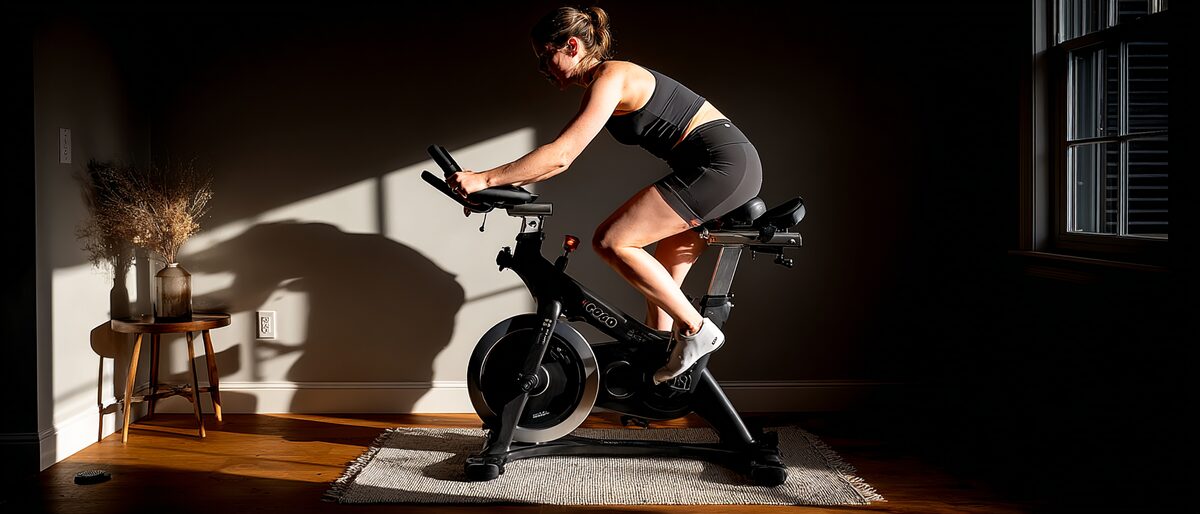
Spin bikes are designed to replicate the feel of riding a road bike. The riding position is forward-leaning, the saddle is narrower, and a heavy flywheel provides momentum that mimics the feeling of a bicycle wheel carrying speed.
The flywheel is central to the spin bike experience. Heavier flywheels (15kg and above) create a smoother, more realistic ride because the momentum carries you through the pedal stroke. Lighter flywheels feel choppier and less natural. When the marketing mentions flywheel weight, this is why it matters.
Spin bikes excel at high-intensity training. The resistance changes quickly — often via a simple dial — which makes them ideal for interval work, sprint efforts, and class-style workouts. Many people use them alongside apps or streaming classes that provide guided sessions.
One important difference from upright bikes: on most spin bikes, the flywheel and pedals are directly connected (a "fixed gear" mechanism). This means the pedals keep turning as long as the flywheel is spinning — you cannot suddenly stop pedalling without the resistance knob. This feels natural to cyclists but can surprise first-time users. Some spin bikes have a freewheel mechanism that allows coasting, but this is less common.
Spin bikes are less comfortable than upright or recumbent bikes for casual use. The saddle is hard and narrow (though you can replace it), the riding position puts weight on your hands, and they are designed for focused workout sessions rather than gentle pedalling while watching television.
Air Bikes
Air bikes — sometimes called fan bikes — use a large fan for resistance. The harder you pedal, the more air resistance the fan generates, which means the resistance is infinitely variable and directly proportional to your effort. You do not set a resistance level — you create it.
Most air bikes also have moving handles that involve your upper body, making them a genuine full-body exercise machine. This combination of upper and lower body work with progressive resistance makes air bikes exceptionally effective for high-intensity interval training.
Air bikes are brutally hard when you push them. They are a favourite in CrossFit gyms and athletic training facilities for a reason — few machines will exhaust you as efficiently.
They are also loud. The fan generates noise that increases with effort, and at full pace, an air bike in a small room is not subtle. They are not designed for gentle background cycling — they are designed for short, intense sessions.
Folding and Compact Bikes
Folding exercise bikes collapse to a smaller footprint for storage. They suit people who genuinely do not have space for a permanent exercise bike but still want the option to cycle at home.
The compromises are real. Folding bikes are less stable than fixed-frame models, the components are lighter (and often flimsier), the flywheel is small, and the riding experience is basic. They are fine for light to moderate cardio but will disappoint anyone looking for intense workouts or a realistic cycling feel.
If you need the bike to disappear when not in use and your expectations are moderate, a folding bike serves its purpose. If you can find space for a permanent setup, a standard upright or spin bike is a better investment.
Under-Desk Pedal Exercisers
These are the simplest form of exercise bike — essentially just the pedal mechanism with no seat, frame, or console (or a very basic one). You place them under a desk and pedal while sitting in your office chair.
They provide gentle leg movement and burn some calories, but the resistance is minimal and the cardiovascular benefit is limited compared to any actual exercise bike. They are a tool for adding movement to a sedentary day, not a substitute for exercise.
For that specific purpose — gentle activity while working — they do a reasonable job and cost very little. Just be realistic about what they deliver.
Resistance Systems Explained
The resistance system determines how the bike creates the effort you pedal against. There are three main types:
Magnetic resistance uses magnets positioned near the flywheel to create resistance without physical contact. This is the quietest system, requires almost no maintenance, and provides smooth, consistent resistance. Magnetic resistance is the standard on most mid-range and premium bikes.
Friction resistance uses a brake pad pressing against the flywheel. Turning the resistance knob increases or decreases the pressure. Friction systems are simple and affordable but louder than magnetic, and the brake pad wears over time and eventually needs replacement. Many budget spin bikes use friction resistance.
Air resistance is the fan system used on air bikes. It is self-regulating — more effort equals more resistance — and provides an unlimited resistance ceiling. It is the loudest system and is only found on air bikes.
If noise matters in your home, magnetic resistance is the clear winner. If you are training intensely and noise is not a concern, friction and air both work well. In every case, magnetic resistance requires the least ongoing maintenance.
The Subscription Question
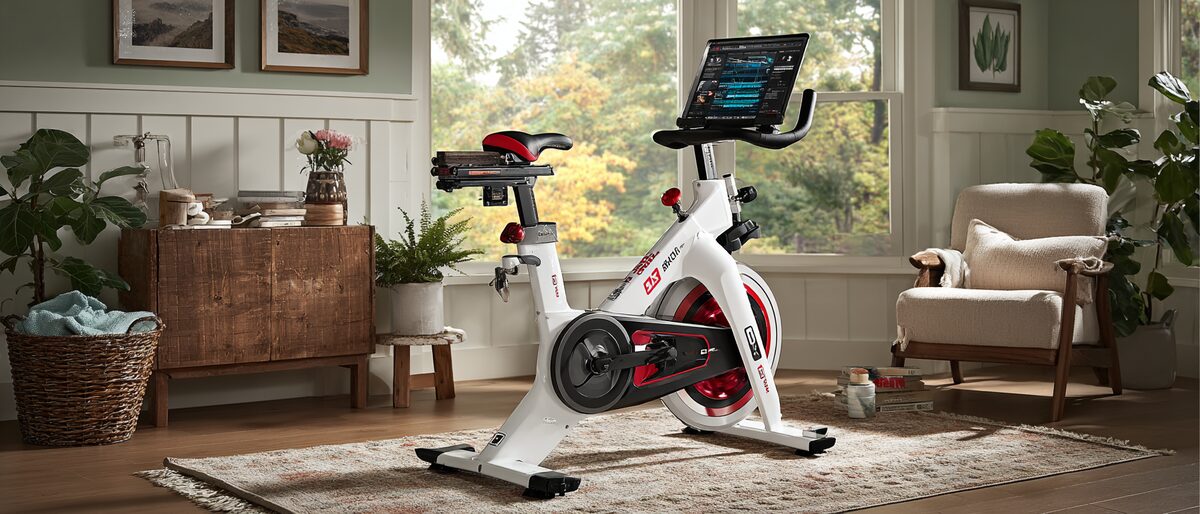
This deserves honest discussion. Many exercise bikes — particularly at the premium end — come with large touchscreens designed for subscription-based workout platforms. The screen and the subscription are the product's main selling point.
The appeal is genuine. Guided classes with energetic instructors, performance tracking, virtual rides through scenic locations, and leaderboards that add a competitive element — these features motivate many people and help them train consistently.
The concerns are also genuine. Subscriptions typically cost a significant monthly fee, which adds up substantially over the lifetime of the bike. Some bikes function in a limited capacity without the subscription, which means you are paying ongoing rent on features you already paid for in the hardware. And if the company changes its pricing, content, or platform — or worse, goes under — your expensive bike may lose much of its functionality.
A perfectly good alternative: buy a bike without a built-in screen, mount your own tablet on a holder, and use any of the many free or lower-cost cycling apps available. You keep full control over your content and your costs, and if you want to switch apps, you simply download a different one.
Neither approach is wrong. Just understand what you are committing to financially before you choose.
Adjustability and Fit
A bike that does not fit your body will be uncomfortable, and uncomfortable equipment does not get used. Check these adjustment points:
Saddle height. When your foot is at the bottom of the pedal stroke, your knee should have a slight bend — not fully locked out, not deeply bent. Almost all exercise bikes allow saddle height adjustment, but check the range suits your leg length.
Saddle position (fore/aft). Some bikes allow you to slide the saddle forward and backward. This affects knee alignment over the pedals and how much weight rests on your hands. Spin bikes and smart bikes usually offer this; basic upright bikes sometimes do not.
Handlebar height. Adjustable handlebars let you find a comfortable position for your back and shoulders. Higher handlebars = more upright, less strain on the back. Lower handlebars = more aggressive, more like road cycling.
If a bike only has one or two adjustment points, it may not fit you well — particularly if you are very tall, very short, or have proportions that differ from average.
Noise, Space, and Practicalities
Noise. Magnetic resistance bikes are the quietest — often nearly silent at moderate resistance. Friction bikes generate a whooshing sound. Air bikes are the loudest. Your own pedalling adds some noise regardless — think rhythmic whirring rather than clanking.
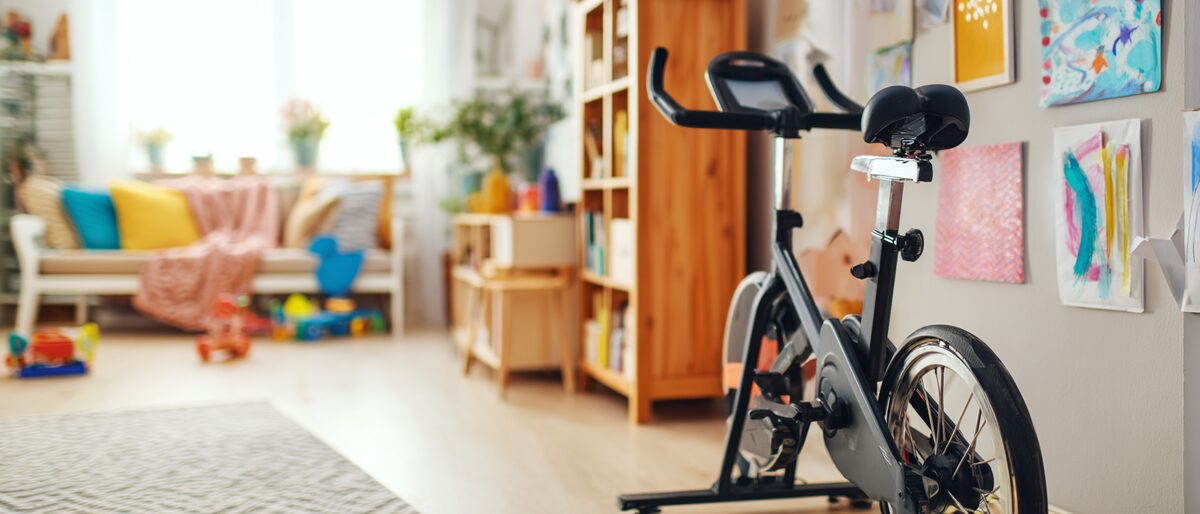
Space. Measure. A spin bike footprint is roughly 120cm x 55cm. An upright bike is similar. A recumbent bike is longer. An air bike is wider because of the handles. And you need clearance around the bike for safe mounting and dismounting.
Weight. A quality spin bike weighs 40–60kg. This matters for two reasons — it contributes to stability (good), and it makes moving the bike difficult (inconvenient). Transport wheels on the front help, but expect a heavier bike to live where you put it.
Power. Most magnetic-resistance bikes with electronic consoles need a power source — either mains electricity or batteries. Some are self-powered, generating electricity from your pedalling. Check this before you decide on placement.
Pedals — A Detail That Matters
Exercise bike pedals come in several types, and the wrong type can affect your comfort and safety.
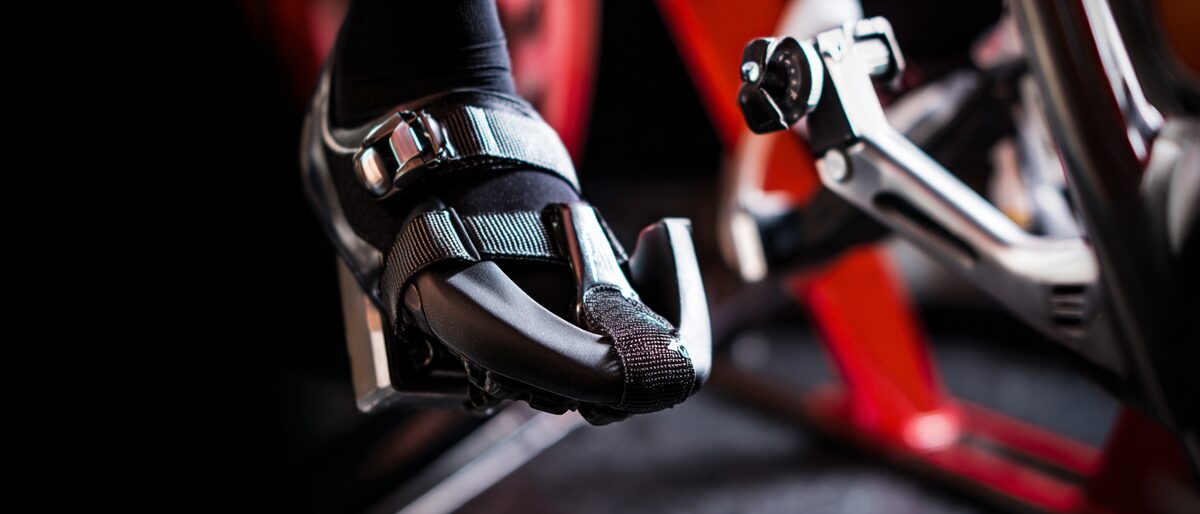
Flat pedals with toe cages. The most common on upright and recumbent bikes. You wear normal trainers and slide your foot into a cage that straps over the top. Simple, universal, and adequate for moderate training.
SPD clip-in pedals. Found on many spin bikes. These require specific cycling shoes with cleats that lock into the pedal. Clipping in provides a much more secure connection and allows you to pull up on the pedals as well as push down, which improves efficiency. If you already own cycling shoes, this is ideal. If not, it is an additional cost.
Dual-sided pedals. One side has a clip-in mechanism, the other a flat pedal with cage. This offers the best of both worlds and is increasingly common on mid-range spin bikes.
If you share the bike with household members who do not own cycling shoes, dual-sided pedals are the practical choice.
Choosing the Right Exercise Bike
| Your Situation | Best Bike Type | Key Features to Prioritise |
|---|---|---|
| General fitness, gentle to moderate effort | Upright bike | Comfortable seat, magnetic resistance, stable frame, basic console |
| Back pain, joint issues, or rehabilitation | Recumbent bike | Full back support, easy step-through access, smooth resistance |
| Intense training, interval work, fitness classes | Spin bike | Heavy flywheel (15kg+), stable frame, quick resistance adjustment |
| Full-body conditioning, HIIT training | Air bike | Moving handles, fan resistance, robust frame |
| Very limited space | Folding bike (manage expectations) | Stable when unfolded, folds genuinely small, adequate resistance |
| Cyclist training indoors on own road bike | Turbo trainer (see cycling section) | Direct drive, smart connectivity, realistic road feel |
| Adding gentle movement to desk work | Under-desk pedal exerciser | Quiet, stable on floor, does not bump desk |
The Honest Limitations
Saddle comfort is a real issue. Many exercise bike seats are uncomfortable, particularly on spin bikes. This puts people off in the first weeks before their body adapts. Padded shorts, a gel seat cover, or a replacement saddle can all help — but be prepared for an adjustment period.
Lower body only (mostly). Standard exercise bikes work your legs and cardiovascular system. Only air bikes with moving handles provide a meaningful upper-body workout. If full-body training matters to you, factor this in.
Boredom. Stationary cycling can be monotonous. A bike in front of a screen — whether a built-in one or your own device — helps. So does music, podcasts, and varied workouts. But if you find repetitive motion boring, a bike may not hold your attention regardless.
Budget bikes feel like budget bikes. The cheapest exercise bikes are unstable, uncomfortable, and sometimes break. You do not need to spend a fortune, but a very cheap bike is rarely money well spent.
Common Mistakes Buyers Make
Choosing a bike based on the screen rather than the bike. A big screen on a poorly built bike is still a poor experience. Ride quality — flywheel weight, resistance smoothness, adjustability, frame stability — matters more than display size.
Underestimating the importance of fit. A bike that does not adjust to your body will be uncomfortable within minutes. Check the adjustment range against your height and leg length before buying.
Forgetting about saddle comfort. Nearly every exercise bike, especially spin bikes, benefits from either padded cycling shorts or a replacement saddle. Budget for this.
Buying a recumbent bike when you want intensity. Recumbent bikes are comfortable, not challenging. If high-intensity training is your goal, a spin bike or air bike is a far better match.
Not factoring in subscription costs. A connected bike with a monthly subscription fee is a very different financial commitment from a standalone bike. Calculate the total cost over three to five years.
Your Pre-Purchase Checklist
What Kind of Riding Do You Want to Do?
Gentle daily cardio, intense training sessions, rehabilitation, or something in between? This narrows your choice immediately.
Have You Measured Your Space?
Include clearance for getting on and off. If the bike is going in a room you also use for other things, measure with the bike in place and make sure the room still works.
Is Noise a Factor?
Magnetic resistance is quiet. Friction is moderate. Air is loud. Choose accordingly.
Does the Bike Adjust to Fit You?
Check saddle height range, handlebar height, and seat fore/aft adjustment against your body dimensions. If the bike has a weight limit, ensure you are well within it.
Are You Comfortable with Ongoing Subscription Costs?
If a bike requires a subscription for full functionality, include that in your budget. If not, consider whether a simpler bike with your own tablet achieves the same result.
Have You Considered Saddle Comfort?
Budget for padded shorts or a gel seat cover, especially if you are buying a spin bike.
Why Buying Through Amazon Makes Sense
Exercise bikes are one of the most competitive categories on Amazon, which translates to consistently keen pricing. The range spans budget folding bikes to premium smart bikes, and the delivery logistics for heavy, bulky fitness equipment are something Amazon handles well.
Returns matter particularly for exercise bikes — saddle comfort and riding feel are impossible to judge from photographs. Amazon's returns process means you can try a bike and send it back if it genuinely does not suit you, which is harder to do through specialist fitness retailers.
The perfect exercise bike is not the one with the biggest screen or the heaviest flywheel. It is the one that you actually enjoy sitting on — because that is the one you will ride tomorrow, and the day after, and the day after that.
Browse Exercise Bikes And Indoor Cycling on Amazon
Every button routes to your local Amazon store automatically