The Complete Guide to MMA Equipment — Gloves, Protection, and Training Gear for Mixed Martial Arts
Mixed martial arts is the most equipment-varied combat sport. Where boxing needs gloves and a mouth guard, and judo needs a gi, MMA combines striking and grappling in ways that demand a broader kit — gloves that allow you to punch and grapple, shin guards that absorb kicks, hand wraps that stabilise wrists through striking and ground transitions, clothing that resists gripping and protects skin, and protective equipment that covers the vulnerabilities of both standing and ground fighting. The equipment list is longer than any single martial art, but building it is straightforward once you understand what each piece does and when you actually need it. This guide covers the essentials from your first session through to regular sparring, with honest advice on what to buy first, what to buy later, and what to look for in each piece.
Browse MMA Equipment on Amazon
Every button routes to your local Amazon store automatically
Ask Your Club First
Before you buy anything, ask your coach or club what is required. Different gyms have different rules about glove weight, glove type, and protective equipment during specific sessions. Some clubs provide loaner gloves and shin guards for beginners. Some require specific colours or standards for sparring. Buying equipment that your club does not allow wastes money and delays your start.
You do not need a full kit on day one. Most beginners need hand wraps, a mouth guard, and a pair of boxing gloves to start pad work and bag work. The rest comes as your training progresses into sparring and grappling.
MMA Gloves — Training, Sparring, and Grappling
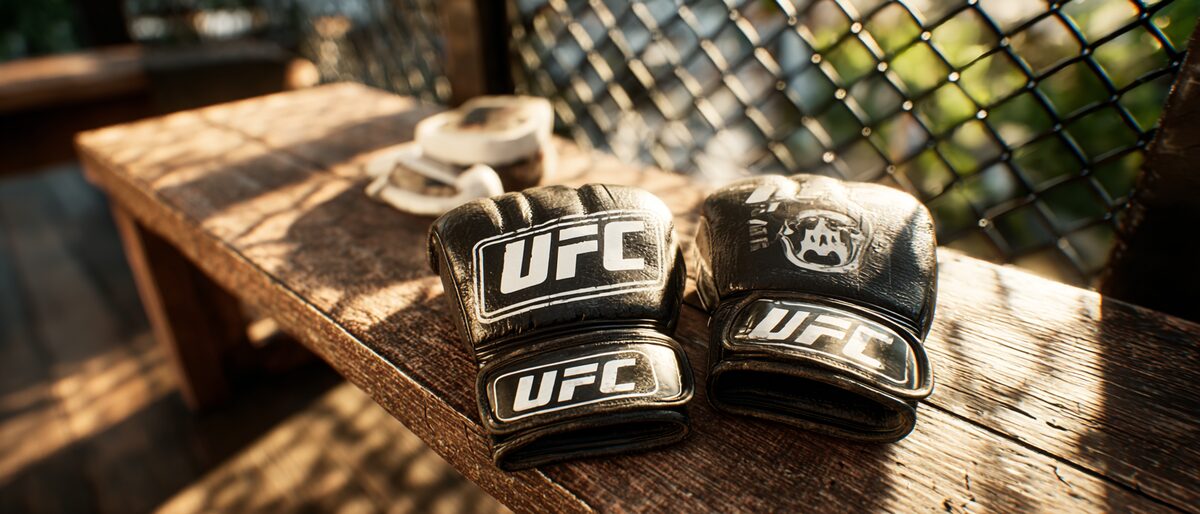
MMA gloves are smaller than boxing gloves with open fingers, allowing you to grapple, clinch, and attempt submissions while still protecting the hands during strikes. They are the defining piece of MMA-specific equipment.
Sparring MMA gloves (7oz–8oz) are the standard for MMA sparring — striking and grappling combined. They have enough padding to protect both you and your training partner during striking exchanges while leaving the fingers free for grappling. Most beginners should aim for 7oz sparring gloves as their first MMA-specific glove.
Grappling gloves (4oz–5oz) are thinner, lighter, and closer to competition gloves. They are used for grappling-focused sessions and advanced training. The reduced padding means striking with them at full power is not advisable — they do not protect your partner's head adequately and offer less protection for your own hands.
Competition gloves (4oz) are the gloves worn in professional MMA bouts. They are regulation equipment, not training equipment. Do not use them for regular training — the padding is insufficient to protect hands and training partners over repeated sessions.
Fit: MMA gloves should be snug with no excess material bunching at the palm. The Velcro strap should secure the wrist firmly. Gloves that slip or rotate during grappling are both ineffective and dangerous.
Boxing Gloves for MMA Training
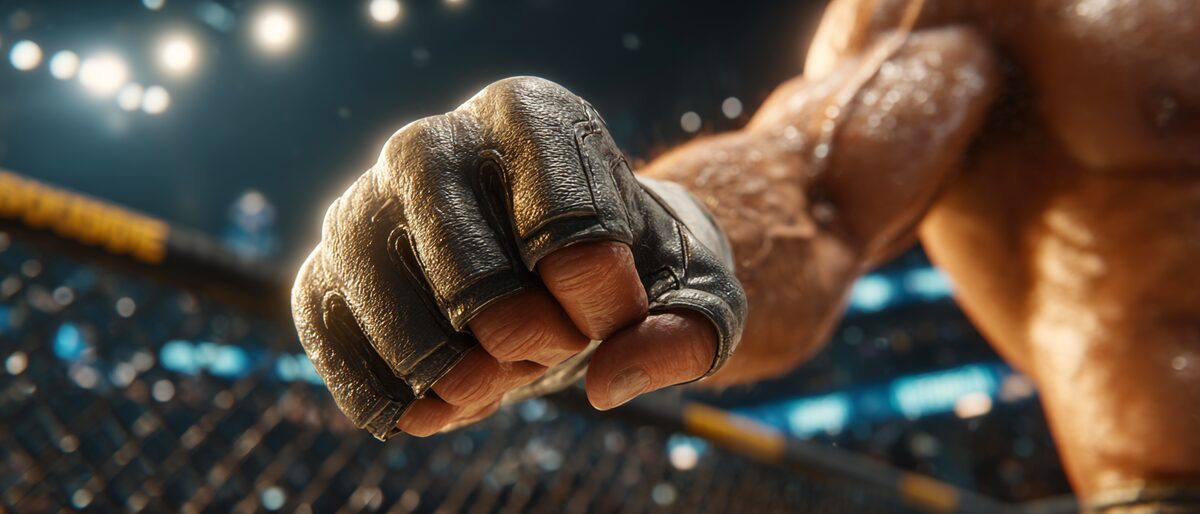
Boxing gloves are a separate and equally essential purchase for MMA training. They are used for striking-focused sessions — pad work, bag work, and boxing-rules sparring — where the heavier padding protects your hands and your training partners more effectively than MMA gloves.
14oz–16oz boxing gloves are standard for sparring. The heavier glove absorbs more impact, reducing the risk of injury to both parties. 16oz is the most common sparring weight. 14oz is sometimes used by lighter fighters.
12oz–14oz boxing gloves suit pad and bag work, where the lighter weight allows faster hand speed and more natural technique.
Material: Leather gloves are more durable, more comfortable over time, and maintain their shape better than synthetic alternatives. Synthetic (PU) gloves are more affordable and adequate for beginners — a reasonable starting point while you establish whether you will train long-term.
Wrist support: Look for gloves with a long, secure Velcro cuff that wraps the wrist firmly. Lace-up gloves provide the most secure fit but require a partner to tie them — most training environments use Velcro for convenience.
Hand Wraps
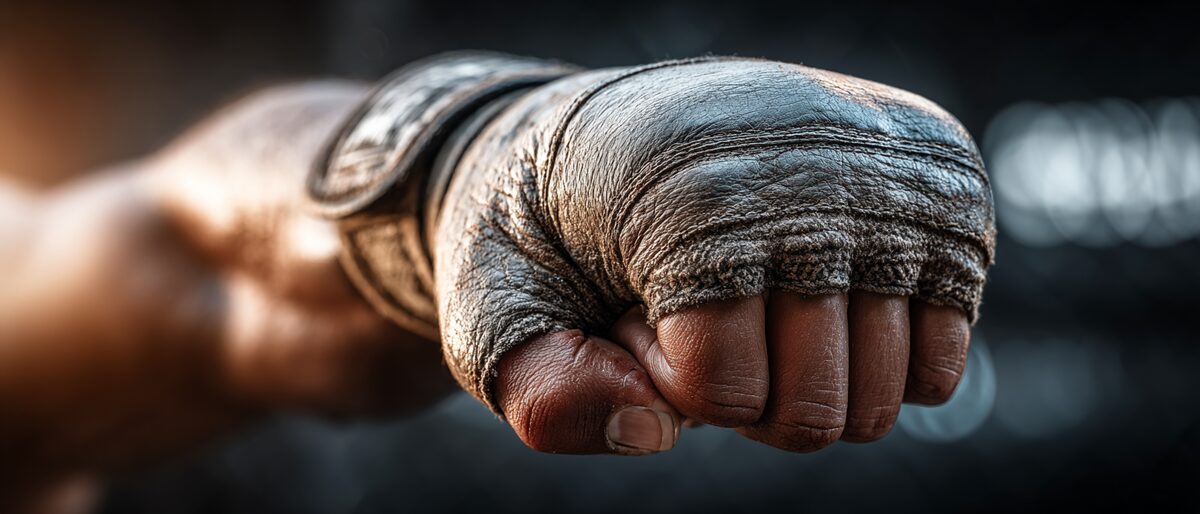
Hand wraps are non-negotiable. They are worn under both boxing gloves and MMA gloves to stabilise the wrist, protect the knuckles, and bind the small bones of the hand together so that impact is distributed across the entire hand rather than concentrated on individual knuckles.
Traditional cotton wraps (approximately 4.5m / 180 inches) are the standard. They wrap around the wrist, across the knuckles, and between the fingers in a pattern that creates a supportive, cushioned layer. Learning to wrap correctly is a basic skill that your coach will teach you — it takes a few minutes and becomes automatic with practice.
Quick wraps (gel wraps / inner gloves) are slip-on alternatives that provide convenience at the expense of customisation. They are faster to put on but do not provide the same level of wrist support as traditional wraps. They suit bag work and pad sessions; for sparring, traditional wraps are preferred.
Replace wraps when they lose their elasticity or become excessively stretched. Wraps that do not provide tension do not provide support.
Shin Guards
Shin guards protect your shins and the top of your foot from the impact of kicks — both when you kick and when your partner checks (blocks) your kick. Shin-on-shin contact without protection is intensely painful and causes bone bruising that can accumulate into long-term damage.
Strap-style shin guards use Velcro straps to secure the guard in place. They offer more structure and typically more padding than sock-style guards. They are the standard for striking-focused sparring.
Sock-style shin guards slide on like a sleeve. They are lighter, more flexible, and easier to put on and remove. They suit lighter sessions and grappling-heavy training where a bulkier guard would interfere.
Fit: Shin guards should sit securely without rotating during movement. A guard that slides around your leg during a session fails to protect the areas that need it. The guard should cover from below the knee to the top of the foot. Try different sizes and styles — fit varies significantly between brands.
Mouth Guard
A mouth guard protects your teeth, gums, and jaw from strikes, accidental head clashes, and impacts during grappling. It also reduces the risk of concussion by absorbing shock transmitted through the jaw.
Boil-and-bite mouth guards are the affordable, practical starting point. You soften them in hot water and bite down to create a custom mould. They provide good protection and fit for the majority of training situations.
Custom-fitted mouth guards (made by a dentist or specialist) provide the best fit, the best protection, and the best comfort — particularly for breathing and speaking during activity. They are a worthwhile investment for regular fighters.
The mouth guard must allow you to breathe and speak. A guard that is so bulky you cannot breathe through it, or that you constantly want to remove, will not be worn consistently. Fit and comfort determine whether you actually use it.
Groin Protection
A groin guard (cup and supporter) is mandatory for competition and essential for any training that involves striking or knee contact.
The cup is a rigid shell (polycarbonate, polypropylene, or steel) that distributes impact away from the groin. It is held in place by a jockstrap, a supporter, or compression shorts with a cup pocket.
Compression shorts with an integrated cup pocket are the most popular option in MMA — they hold the cup securely, prevent shifting during grappling, and feel less intrusive than a jockstrap.
Wear a groin guard consistently during striking sessions. Accidental groin contact happens in training, and a single unprotected strike can cause serious injury.
Headgear
Headgear protects the face, ears, and forehead from cuts, bruising, and the friction that causes cauliflower ear during grappling. It reduces the visible damage from sparring — cuts and bruising that would otherwise accumulate.
Headgear does not prevent concussion. It reduces surface injuries (cuts, swelling, ear damage) but does not eliminate the brain movement within the skull that causes concussion. Understand what headgear protects against and what it does not.
Open-face headgear provides the best visibility and breathing. Full-face headgear (with a bar or cage) provides additional nose and cheek protection but restricts vision.
Headgear is not required for bag work or pad sessions. It is used during sparring — and not all sparring sessions require it. Your coach will advise when headgear is appropriate for your level and the intensity of the session.
Clothing — Rash Guards, Shorts, and Spats
MMA training involves ground work on mats, where skin-to-skin contact and friction cause mat burns, rashes, and create conditions for skin infections.
Rash guards are tight-fitting, long-sleeved or short-sleeved tops made from durable, moisture-wicking material. They protect the skin from mat burn, reduce the transmission of skin infections, and wick sweat. For any grappling-focused session, a rash guard is strongly recommended.
MMA shorts (fight shorts) are designed with stretch panels and reinforced stitching to withstand the pulling, gripping, and movement of grappling. They typically have no pockets, no protruding hardware (zips, buttons) that could catch or injure, and a secure waistband that does not shift during rolls.
Spats (compression tights) are worn under shorts or alone during grappling. Like rash guards, they protect the skin from mat burn and infection and provide a compression layer for the legs.
Training Equipment
Beyond personal protective gear, several items support MMA training at home or supplement gym sessions.
Heavy bags — the core striking tool, covered in our boxing equipment guide. A heavy bag at home allows you to practise combinations, kicks, and conditioning outside of gym sessions.
Focus pads (mitts) and Thai pads — used with a training partner for striking drills. Focus pads suit boxing combinations; Thai pads suit kick-heavy work.
Grappling dummies — weighted dummies used for practising throws, ground-and-pound positioning, and submissions without a partner. They are useful but cannot replicate the resistance and unpredictability of a real training partner.
Skipping ropes — the classic combat sports conditioning tool (covered in our conditioning equipment guide).
Building Your Kit Over Time
| Your Stage | What You Need | What Can Wait |
|---|---|---|
| First sessions | Hand wraps, mouth guard, boxing gloves | MMA gloves, shin guards |
| Regular training | Add MMA sparring gloves, shin guards, groin guard | Headgear, rash guard |
| Sparring | Add headgear (if coach advises), rash guard, fight shorts | Grappling gloves, home training equipment |
| Competing | Competition gloves, full protective kit, custom mouth guard | — |
Choosing Your Equipment
| Item | What to Look For | Common Pitfall |
|---|---|---|
| MMA gloves (sparring) | 7oz, snug fit, secure wrist strap | Buying 4oz grappling gloves for striking |
| Boxing gloves | 16oz for sparring, secure Velcro cuff | Buying gloves that are too light for sparring |
| Hand wraps | 180-inch cotton, slight elasticity | Not using wraps at all |
| Shin guards | Full coverage shin to foot, secure straps | Guards that rotate during movement |
| Mouth guard | Good fit, ability to breathe | Buying the cheapest option that you never wear |
| Groin guard | Rigid cup, secure holder | Training without one during striking |
The Honest Limitations
Equipment does not make you a fighter. Technique, conditioning, timing, and mat time determine your ability. The best gloves in the world do not improve a punch that has not been drilled thousands of times.
Headgear does not prevent concussion. It prevents cuts and cauliflower ear. Understand the difference.
Sparring gear degrades. Padding compresses over time, Velcro loses grip, stitching weakens. Gloves and shin guards that have absorbed hundreds of sessions no longer provide the protection they once did. Inspect your equipment regularly and replace it when the padding feels flat or the structure has lost its integrity.
MMA training carries inherent risk. Proper equipment reduces risk; it does not eliminate it. Training with a reputable coach, controlled sparring, and honest communication with training partners about intensity are as important as any piece of equipment.
Common Mistakes Buyers Make
Buying everything before the first session. Start with the basics and build as your training demands.
Using 4oz grappling gloves for hard sparring. They do not protect your hands or your partner's head adequately. Use 7oz+ sparring gloves.
Skipping hand wraps. The most common avoidable hand injury in combat sports is a wrist sprain or knuckle fracture from striking without wraps. Wraps take two minutes to apply and prevent injuries that take weeks to heal.
Buying cheap mouth guards and never wearing them. A mouth guard only works if you wear it. Invest in one that fits comfortably enough that you do not constantly remove it.
Not replacing worn equipment. Flat padding provides flat protection — which is none. Replace gloves and shin guards when the padding no longer absorbs impact.
Your Pre-Purchase Checklist
- [ ] Have you asked your coach what equipment is required and preferred?
- [ ] Do you have hand wraps?
- [ ] Do you have boxing gloves in an appropriate weight for your sessions?
- [ ] Do you have a mouth guard that fits and allows breathing?
- [ ] For sparring: do you have MMA sparring gloves (7oz+), shin guards, and a groin guard?
- [ ] Does all protective equipment fit securely without shifting during movement?
Why Buying Through Amazon Makes Sense
Amazon carries MMA equipment from specialist combat sports brands. Customer reviews are critical for this category — real-world reports on glove padding integrity after sustained use, shin guard fit during active sessions, Velcro durability through hundreds of wrapping and unwrapping cycles, and mouth guard comfort during heavy breathing. For MMA specifically, reviews from people who train both striking and grappling in the same equipment provide the most relevant perspective.
MMA asks you to do everything — strike, grapple, clinch, scramble, defend, and think — often in the same round, sometimes in the same second. The equipment exists to let you do all of it safely enough that you can do it again tomorrow. Hand wraps that stabilise the wrist. Gloves that protect the fist and the face it hits. Shin guards that absorb the kick you throw and the kick you check. A mouth guard that keeps your teeth where they belong. None of it makes you skilled. All of it keeps you on the mat long enough to become skilled. That is the deal.
Browse MMA Equipment on Amazon
Every button routes to your local Amazon store automatically