The Complete Guide to Mountain Bikes — Finding the Right Bike for the Trails You Actually Ride

Mountain biking is one of those rare activities that can be a gentle weekend trail ride through woodland or a white-knuckle descent down a rock-strewn mountainside — and the same basic machine handles both. But "the same basic machine" covers an enormous range of designs, suspension types, wheel sizes, and component levels that can make choosing a mountain bike bewildering, particularly if you are buying your first one. This guide cuts through the jargon, explains what actually matters at each level of riding, and helps you spend your money on the bike that matches the trails you will genuinely ride — not the trails you fantasise about.
Browse Mountain Bikes on Amazon
Every button routes to your local Amazon store automatically
What Makes a Mountain Bike a Mountain Bike
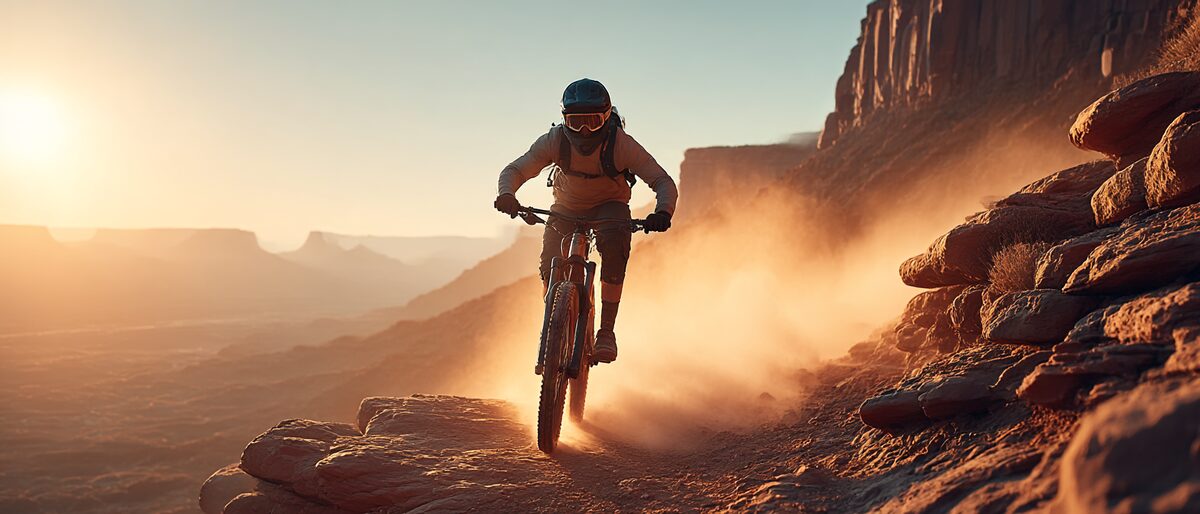
A mountain bike is built to handle unpaved terrain — dirt trails, rocky paths, forest tracks, gravel, roots, and mud. Compared to a road bike, it has wider tyres with aggressive tread, suspension to absorb impacts, a more upright riding position, flat or riser handlebars for control, and powerful brakes that work reliably in wet and muddy conditions.
Within that definition sits a wide spectrum of bikes, from gentle trail-riding machines to full-race downhill rigs designed for bike parks and competitions. The right bike depends entirely on where and how you ride.
Types of Mountain Biking
Understanding the broad categories helps narrow your choice quickly.
Cross-country (XC). Efficiency-focused riding — long distances, climbs, and fitness-oriented trails. Bikes are lightweight with moderate suspension (80–120mm travel). The emphasis is on pedalling speed over descending capability.
Trail. The most versatile and popular category. Trail bikes handle a broad mix of climbing and descending on varied terrain. They typically have 120–150mm of suspension travel and strike a balance between climbing efficiency and downhill confidence. If you are buying one mountain bike for general riding, this is likely the category.
Enduro / all-mountain. More descending-oriented, with 150–180mm of suspension travel. Designed for riders who climb to reach challenging descents. Heavier and more capable downhill than trail bikes, but less efficient on long climbs.
Downhill (DH). Purpose-built for steep, technical descents. Very long suspension travel (180–200mm+), heavy, and designed to be ridden at bike parks with uplift services. Not practical for general trail riding — you do not want to pedal one uphill.
Cross-country marathon / gravel-adjacent. Lightweight, efficient bikes for long-distance off-road riding on smoother trails, fire roads, and mixed terrain. Often with shorter suspension or rigid forks.
For the vast majority of recreational and enthusiast riders, trail bikes offer the best balance of capability and versatility.
Hardtail vs Full Suspension
This is usually the first fork in the decision tree.
Hardtail
A hardtail has a suspension fork at the front but no rear suspension — the rear triangle of the frame is rigid. This is simpler, lighter, cheaper, and requires less maintenance.
Hardtails are excellent for cross-country riding, less technical trails, gravel, and general fitness riding. They teach good riding technique because you cannot rely on rear suspension to smooth out mistakes — you learn to read the trail and choose your line.
They are also significantly more affordable at every quality level. The money you save on rear suspension goes into better components — a better fork, better brakes, better wheels — which often results in a better-riding bike overall than a full-suspension machine at the same price.
Best for: Beginners, cross-country riders, fitness riders, tighter budgets, and anyone who values simplicity and low maintenance.
Full Suspension
A full-suspension bike has both a front fork and a rear shock absorber, connected through a pivot-based linkage system in the frame. The rear suspension absorbs impacts from the back wheel, dramatically improving comfort, traction, and confidence on rough, technical terrain.
Full suspension transforms the riding experience on rocky, rooty, and challenging trails. It allows you to ride faster with more control and less fatigue on descents. The trade-off is weight, cost, complexity, and maintenance — rear suspension linkages need periodic servicing, bearings wear, and the additional components add both weight and expense.
Best for: Trail, enduro, and downhill riders. Anyone riding rough, technical terrain regularly. Riders who prioritise descending comfort and confidence.
The Honest Comparison
A quality hardtail at a moderate price will outperform a cheap full-suspension bike in nearly every way. If your budget limits you to the entry level of full suspension, you will almost certainly get a better-riding bike by spending the same amount on a hardtail. Full suspension only justifies itself when the budget allows for quality components throughout — frame, shock, fork, brakes, and wheels all need to be competent.
Wheel Sizes Explained
Modern mountain bikes come in two primary wheel sizes: 27.5 inches (also called 650b) and 29 inches (29er). The old standard of 26 inches has largely been retired from new production, though millions of 26-inch bikes remain in use.
29-inch Wheels
Larger wheels roll over obstacles more easily — rocks, roots, and trail irregularities that would jolt a smaller wheel are absorbed more smoothly. They maintain momentum better once up to speed, provide a larger contact patch (more tyre on the ground) for better grip, and generally feel more stable at speed.
The trade-off: 29-inch wheels are heavier, slower to accelerate, and can feel less agile in tight, twisting trail sections. Shorter riders (under about 168cm / 5 feet 6 inches) may find 29-inch wheels feel disproportionately large and unwieldy.
29-inch wheels have become the dominant standard in cross-country, trail, and enduro categories. If in doubt, 29 is the default choice for most adult riders of average height and above.
27.5-inch Wheels
Smaller, lighter, and quicker to accelerate than 29ers. They feel more nimble, more playful, and more responsive in tight corners. The bike manoeuvres more easily at lower speeds and on technical terrain where quick direction changes matter.
27.5-inch wheels remain popular on more aggressive enduro and downhill bikes, on bikes designed for shorter riders, and among riders who simply prefer the livelier handling.
Mullet Setup
An increasingly common configuration that pairs a 29-inch front wheel with a 27.5-inch rear wheel. The theory: the larger front wheel rolls over obstacles and provides stability, while the smaller rear wheel improves agility and allows for more compact frame geometry. Some riders find this the best of both worlds; others prefer matched wheels. Most mullet bikes are purpose-designed — simply swapping a different-sized wheel into an existing bike does not produce the same result, as the frame geometry needs to account for the different diameters.
Which to Choose
If you are average height or taller and ride varied terrain, 29-inch wheels are the safe default. If you are shorter, value agility, or ride tight technical trails, 27.5 may suit you better. If possible, test ride both — the difference is immediately noticeable and personal preference plays a genuine role.
Frame Materials
Aluminium (alloy) is the standard frame material for the majority of mountain bikes. It is light, strong, reasonably stiff, and affordable. Aluminium frames are durable, resist corrosion, and handle the impacts and stresses of off-road riding well. Most riders — from beginners to experienced enthusiasts — will be well served by an aluminium frame.
Carbon fibre is lighter and can be engineered to be stiffer in some directions and more compliant in others, creating a frame that pedals efficiently while absorbing trail vibration. Carbon frames are standard at the upper end of the market and on competition bikes.
The trade-off: carbon is significantly more expensive, and while modern carbon frames are strong, a hard impact that would dent an aluminium frame can crack a carbon one — sometimes invisibly. Carbon repair is possible but specialist.
Steel is occasionally used for hardtail frames, particularly in the more traditional or handbuilt end of the market. Steel offers a comfortable, springy ride quality and excellent durability, but it is heavier than aluminium.
For most buyers: Aluminium provides the best balance of performance, durability, and value. Carbon is a worthwhile upgrade if your budget allows and weight savings matter to you.
Suspension — What the Numbers Mean
Suspension travel, measured in millimetres, describes how far the fork (front) or shock (rear) compresses. More travel absorbs bigger impacts and provides more confidence on rough terrain, but adds weight and can reduce pedalling efficiency.
| Category | Front Travel | Rear Travel (if full suspension) |
|---|---|---|
| Cross-country | 80–120mm | 80–120mm |
| Trail | 120–150mm | 120–150mm |
| Enduro | 150–180mm | 150–170mm |
| Downhill | 180–200mm+ | 180–200mm+ |
Fork quality matters more than travel. A well-made 120mm fork from a reputable manufacturer provides better performance than a cheap 150mm fork. Good forks use sealed cartridge damping systems that control compression and rebound smoothly. Budget forks use basic coil springs that feel harsh and unresponsive.
Rear shock types. Air shocks are lighter and more adjustable. Coil shocks provide more consistent, plush performance but are heavier. Most cross-country and trail bikes use air shocks; some enduro and downhill bikes use coil.
Gears and Drivetrains
Mountain bike drivetrains have simplified significantly. Most modern mountain bikes use a single chainring at the front (1x, pronounced "one-by") paired with a wide-range cassette at the rear — typically 10, 11, or 12 speeds.
This eliminates the front derailleur, the second shifter, and the chain drops that plagued older double and triple chainring setups. A 1x12 system with a 10–52 tooth cassette provides a gear range wide enough for both steep climbing and fast descending.
What matters: Smooth, reliable shifting under load. The ability to find a gear for both steep climbs and fast flats. Branded drivetrains from established manufacturers offer better shift quality and durability than unbranded components on budget bikes.
At the entry level, a 1x10 or 1x11 drivetrain is perfectly adequate. The difference between a 10-speed and 12-speed drivetrain is smaller gear steps and slightly wider range — nice to have but not essential for recreational riding.
Brakes
All mountain bikes of any seriousness use disc brakes — rotors mounted to the wheel hub, gripped by calipers attached to the frame and fork. Disc brakes provide powerful, consistent stopping in all conditions, including mud, rain, and steep descents.
Hydraulic disc brakes use fluid in sealed lines to transfer force from the lever to the caliper. They provide powerful braking with minimal lever effort and self-adjust as the pads wear. These are standard on mid-range and above mountain bikes and are strongly recommended.
Mechanical (cable-operated) disc brakes use steel cables instead of fluid. They require more lever effort, provide less consistent feel, and need manual adjustment as pads wear. They are found on entry-level bikes and work adequately but are a meaningful step down from hydraulic.
Rotor size affects stopping power. Larger rotors (180mm or 200mm) provide more braking force and better heat dissipation — important for heavier riders, longer descents, and e-mountain bikes. Smaller rotors (160mm) are lighter and sufficient for cross-country and less demanding riding.
Tyres
Mountain bike tyres vary enormously in width, tread pattern, rubber compound, and construction. The right tyres for your terrain make a surprising difference to grip, rolling resistance, and confidence.
Width. Cross-country tyres are typically 2.0–2.3 inches wide. Trail tyres run 2.3–2.5 inches. Enduro and downhill tyres may be 2.4–2.6 inches or wider. Wider tyres offer more grip and cushioning; narrower tyres roll faster and are lighter.
Tread pattern. Aggressive, widely spaced knobs grip in mud and loose conditions. Low-profile, closely spaced knobs roll faster on hardpacked trails and gravel. Many riders use a more aggressive tyre on the front (for steering grip) and a faster-rolling tyre on the rear (for efficiency).
Tubeless. Most mid-range and above mountain bikes are tubeless-ready — the tyre seals directly to the rim with sealant, eliminating inner tubes. Tubeless tyres can be run at lower pressures for better grip without the risk of pinch punctures. Converting to tubeless is a worthwhile upgrade if your wheels and tyres support it.
Frame Sizing and Fit
A mountain bike must fit your body to be comfortable, efficient, and safe. Sizing is based primarily on your height and leg length, with frame sizes typically labelled S, M, L, XL (or equivalent numerical measurements).
Manufacturer sizing charts are the starting point — each brand provides recommended height ranges for each frame size. These are generally reliable but not universal; geometry varies between brands and models.
Standover height — with the bike between your legs and feet flat on the ground, there should be clearance between you and the top tube. On a mountain bike, you want generous clearance because you will be getting on and off the bike on uneven terrain.
Reach and stack — these geometry measurements describe the horizontal and vertical distance from the bottom bracket to the head tube. They affect how stretched or upright you feel on the bike. Longer reach suits taller riders and aggressive descending; shorter reach suits shorter riders and more upright positions.
The best approach: Visit a bike shop and sit on bikes. An online purchase is fine, but knowing your size from physical experience is invaluable. If buying online, follow the manufacturer's sizing guide carefully and check their returns policy.
E-Mountain Bikes
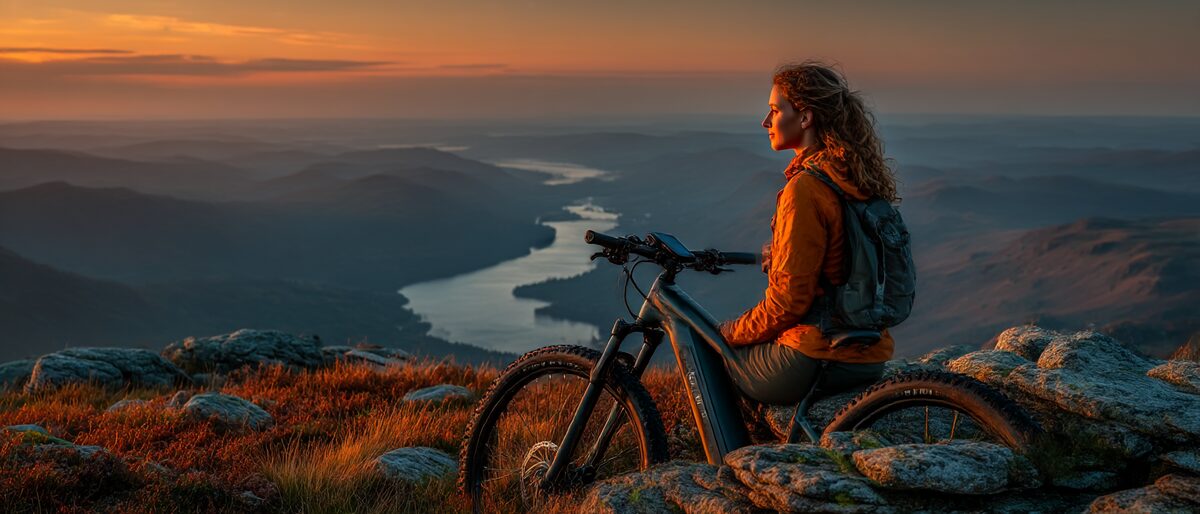
Electric mountain bikes (e-MTBs) use a pedal-assist motor — typically mounted at the bottom bracket — that amplifies your pedalling effort. You still pedal; the motor makes each pedal stroke more powerful.
E-MTBs have transformed mountain biking accessibility. They allow riders to tackle climbs that would otherwise be beyond their fitness, extend ride distances, and make the sport accessible to older riders, those returning from injury, and anyone who wants to spend more time riding downhill and less time suffering uphill.
The additional weight of the motor and battery (typically 4–8kg) makes e-MTBs heavier than equivalent unpowered bikes, which affects handling — though modern e-MTB geometry is specifically designed to manage the extra mass.
Battery range varies enormously depending on terrain, assistance level, rider weight, and temperature. Manufacturer range claims should be treated as optimistic; real-world range is typically 60–80% of the stated figure.
Regulations vary by country and region. Most countries define e-MTBs as bicycles only if the motor assistance cuts out at a specified speed (typically 25 km/h in Europe, 32 km/h in the US for Class 1) and the motor power does not exceed a specified limit (typically 250W in Europe, 750W in the US). Check local regulations and trail access rules — some trails permit e-MTBs, others do not.
What Your Budget Actually Gets You
Mountain bike pricing follows a general pattern. Understanding what improves at each level helps set realistic expectations.
Entry level. Basic hydraulic brakes (or mechanical on the cheapest), a fork that works but lacks adjustability, 1x9 or 1x10 drivetrain, aluminium frame, heavier wheels. Suitable for casual trail riding and learning.
Mid-range. Good hydraulic brakes, a properly damped suspension fork with adjustment, 1x11 or 1x12 drivetrain from a recognised manufacturer, lighter aluminium frame, tubeless-ready wheels. This is where mountain bikes start to feel genuinely capable and confidence-inspiring on varied terrain. For most recreational and enthusiast riders, the mid-range represents the best value.
Upper mid-range. Better fork and shock with more adjustment, lighter and stiffer wheels, carbon frame option, premium drivetrain. Noticeable improvements in weight, responsiveness, and suspension performance.
High-end and race. Top-tier everything — premium carbon frame, high-end suspension, electronic or top-mechanical shifting, lightweight race wheels. Performance differences from upper mid-range are real but incremental. Diminishing returns set in steeply.
Choosing a Bike for Your Riding
| Your Riding | Recommended Bike Type | Key Priority |
|---|---|---|
| Gentle trails, fitness, getting started | Hardtail, cross-country or trail, 29er | Comfort, reliability, value |
| Mixed trails, weekend riding, progressing skills | Hardtail or full-suspension trail, 29er | Versatility, component quality |
| Technical trails, rocks and roots | Full-suspension trail or enduro, 29er or 27.5 | Suspension quality, tyre grip |
| Bike park, steep descents | Full-suspension enduro or DH | Suspension travel, brake power |
| Long-distance off-road | Hardtail XC, 29er | Weight, efficiency, comfort |
| Fitness challenges, want help on climbs | E-MTB (hardtail or full-suspension) | Battery range, motor feel |
The Honest Limitations
You get what you pay for — to a point. The biggest performance jumps happen in the lower half of the price spectrum. Moving from entry level to mid-range is transformative. Moving from mid-range to high-end is noticeable but not transformative. Moving from high-end to top-end is often measurable only on a stopwatch.
Full suspension at the lowest price point is poor value. A budget full-suspension bike uses a cheap rear shock and compromised components to hit the price. The same money buys a significantly better hardtail. Full suspension justifies the investment only when the components are competent.
Bikes need maintenance. Mountain bikes operate in mud, dust, water, and grit. Chains stretch, brake pads wear, suspension seals degrade, and tyres puncture. Budget for annual servicing — or learn to do basic maintenance yourself. A well-maintained bike rides better and lasts far longer.
Fit matters more than specifications. A mid-range bike that fits you perfectly will outperform a high-end bike in the wrong size. Do not compromise on fit.
Common Mistakes Buyers Make
Buying too much bike for the terrain. A 170mm enduro bike on gentle woodland trails is heavy, slow uphill, and wasteful. Match the bike to where you actually ride, not where you dream of riding.
Prioritising suspension travel over component quality. More millimetres of travel means nothing if the fork and shock are poor quality. A well-made 120mm fork outperforms a cheap 150mm fork.
Ignoring the test ride. If possible, ride before you buy. Sizing charts are helpful but not infallible. The connection between rider and bike is physical and personal.
Choosing full suspension on a tight budget. Covered above, but it is the most common regret in mountain bike buying. A good hardtail beats a cheap full-suspension bike.
Skipping the helmet. A mountain bike helmet is not optional. It is the single most important piece of safety equipment. Buy one that fits properly, meets current safety standards, and is comfortable enough that you wear it every ride.
Your Pre-Purchase Checklist
- [ ] Do you know what type of terrain you will primarily ride?
- [ ] Have you decided between hardtail and full suspension based on your terrain and budget?
- [ ] Have you checked the manufacturer's sizing chart against your height and inseam?
- [ ] Have you confirmed the brake type (hydraulic is strongly preferred)?
- [ ] Have you checked whether the wheels are tubeless-ready?
- [ ] If considering an e-MTB, have you checked local regulations and trail access rules?
- [ ] Have you budgeted for a helmet, basic tools, and a repair kit?
- [ ] Have you considered ongoing maintenance costs (annual service, replacement pads and tyres)?
Why Buying Through Amazon Makes Sense
Amazon's mountain bike selection ranges from entry-level hardtails to mid-range trail bikes. Customer reviews provide genuine insight into assembly quality, component durability, and sizing accuracy — all critical for bikes that arrive partially assembled. The returns process is important here: if a bike arrives in the wrong size or with a component issue, straightforward returns prevent the frustration of being stuck with an unsuitable purchase.
The best mountain bike is not the one with the most suspension, the lightest frame, or the most impressive specification list. It is the one that fits your body, matches your terrain, and makes you want to ride it. Everything else is secondary to that.

Browse Mountain Bikes on Amazon
Every button routes to your local Amazon store automatically