Running Shoes Guide:
How to Choose and Buy the Right Pair
Whether you run three miles before breakfast or you are lacing up for the first time, the shoes on your feet matter more than any other piece of running equipment you will ever buy. This guide explains how running shoes actually work, what the jargon means in plain language, how to match a shoe to your foot and your running style, the honest differences between budget and premium options, and how to avoid the most common mistakes that leave runners injured, uncomfortable, or out of pocket.
Browse Running Shoes on Amazon
Every button routes to your local Amazon store automatically
Why Running Shoes Matter More Than You Think
Running is one of the few sports where a single piece of equipment can make the difference between an enjoyable, sustainable habit and a painful, short-lived one. Your shoes are the only thing between your body and the ground, and every time your foot strikes the surface while running, it absorbs a force of roughly two to three times your body weight. Over the course of even a short run, that adds up to thousands of impacts.
The right shoe does not just make running more comfortable - it helps distribute those forces in a way that works with your body rather than against it. The wrong shoe can contribute to shin splints, knee pain, plantar fasciitis, blisters, and a host of other problems that sideline runners unnecessarily. None of this means you need to spend a fortune. It means you need to spend wisely, and that starts with understanding what you are buying.
Running shoes are also intensely personal. Two runners of the same height, weight, and ability level may thrive in completely different shoes because their feet, their gait, and their running surfaces are different. There is no single best running shoe - only the best running shoe for you.
How Running Shoes Work - Anatomy of a Running Shoe
Before you can choose the right shoe, it helps to understand what each part does. Every running shoe is built from three main components, and each one affects how the shoe feels and performs.
The Upper
The upper is everything above the sole - the fabric, mesh, overlays, and lacing system that wraps around your foot. In road running shoes, uppers are typically made from engineered mesh, which provides breathability while supporting the foot. Trail shoes often use thicker, more durable upper materials with reinforced toe caps to protect against rocks and roots.
The upper determines how the shoe fits, how well your foot is held in place, and how much your feet breathe during a run. A poorly constructed upper can cause hotspots and blisters regardless of how good the sole is.
The Midsole
The midsole is the thick layer of foam between the upper and the outsole. This is where most of the engineering goes, and it is the component that most affects how a shoe feels. The midsole provides cushioning, energy return, and in some shoes, stability features that guide the foot through its natural motion.
Different foam technologies produce different ride characteristics. Some foams are soft and cushioned, absorbing impact gently. Others are firm and responsive, returning energy to the runner with each stride. Higher-end shoes often use newer foam compounds that manage to be both lightweight and highly cushioned - something that was technically difficult until relatively recently.
Carbon or nylon plates embedded in the midsole of some shoes add stiffness and propulsion. These were originally developed for elite racing shoes but have filtered into everyday training models. Whether you benefit from a plate depends on your speed, your running form, and your personal preference - they are not universally advantageous.
The Outsole
The outsole is the bottom of the shoe - the rubber that contacts the ground. Road shoes use relatively smooth, durable rubber designed for pavement and hard surfaces. Trail shoes use deeper, more aggressive tread patterns (called lugs) designed to grip loose dirt, mud, rock, and wet surfaces.
The outsole affects traction, durability, and weight. Shoes with more rubber last longer but tend to be heavier. Some shoes use different rubber compounds in high-wear areas (typically the heel and forefoot) to balance durability with weight savings.
Road Running Shoes Explained
Road running shoes are designed for pavement, concrete, treadmills, and well-maintained paths. They are the most common type of running shoe and the right choice for the vast majority of runners.
These shoes prioritise cushioning and a smooth ride over grip and protection. Their outsoles are relatively flat with shallow tread, and their uppers are lightweight and breathable. Road shoes come in a wide range of cushioning levels, from minimal to maximum, and in both neutral and stability versions.
If you run primarily on roads, pavements, parks, or treadmills, road running shoes are what you need. They can also handle occasional jaunts onto well-packed dirt or gravel paths - you do not need trail shoes for a smooth canal towpath or a groomed park trail.
Trail Running Shoes Explained
Trail running shoes are built for unpaved, uneven, and unpredictable terrain. They differ from road shoes in several important ways.
Traction. Trail shoes have deeper, more widely spaced lugs on the outsole that grip loose surfaces like dirt, mud, and wet rock. The depth and spacing of these lugs vary - shoes designed for muddy conditions have deep, aggressive lugs with wide gaps between them so that mud can clear as you run, while shoes designed for hard-packed trails have shallower, more closely spaced lugs for stability on firmer ground.
Protection. Many trail shoes include a rock plate - a thin, semi-rigid layer in the midsole that prevents sharp stones and roots from bruising the sole of your foot. Reinforced toe caps protect against stubbed toes. Uppers are typically more durable and sometimes water-resistant.
Stability. Trail shoes are generally stiffer than road shoes, providing a more stable platform on uneven ground. This stiffness helps prevent ankle rolls on rocky or rooted terrain.
Trail shoes can feel heavy and clumsy on roads, and their aggressive outsoles will wear down quickly on pavement. If you run on both road and trail, consider owning a pair of each, or look at hybrid road-to-trail shoes that attempt to bridge the gap.
Track Shoes and Spikes
Track spikes are specialist shoes designed for running on an athletics track. They are extremely lightweight with minimal cushioning and metal or ceramic spikes on the outsole for maximum grip on the track surface.
Most recreational runners will never need track spikes. They are relevant for competitive track athletes, school athletics, and anyone training for specific track events. They come in different configurations - sprint spikes, middle-distance spikes, and distance spikes - each with different spike placement and plate stiffness to suit different events.
If you are joining an athletics club or competing in track events, your coach or club can advise on the right type. Track spikes are not suitable for any surface other than a track - using them on roads or grass will damage both the spikes and the surface.
Understanding Pronation - Your Foot's Natural Movement
Pronation is one of the most discussed - and most misunderstood - concepts in running shoe selection. Understanding the basics will help you make better choices without getting lost in technical jargon.
When your foot lands while running, it naturally rolls slightly inward. This inward roll is called pronation, and it is a normal, healthy part of how your body absorbs impact. The degree to which your foot rolls determines your pronation type.
Neutral Pronation
Your foot rolls inward a moderate, healthy amount - roughly fifteen percent. Weight is distributed efficiently across the foot, and the push-off comes from the front of the foot evenly. Around thirty percent of the population has neutral pronation. Neutral running shoes work well for this group.
Overpronation
Your foot rolls inward more than the optimal amount, shifting weight towards the inner edge of the foot. This is the most common pronation pattern - some estimates suggest it affects the majority of the population to varying degrees. Mild overpronation is very common and may not require any special shoe at all. Moderate to significant overpronation can be helped by stability shoes, which include features that gently guide the foot to prevent excessive inward rolling.
Underpronation (Supination)
Your foot does not roll inward enough, keeping weight concentrated on the outer edge. This is less common, affecting roughly five percent of runners. It is often associated with high arches and a rigid foot. Neutral shoes with good cushioning are typically recommended for supinators, as the priority is impact absorption rather than inward-roll control.
A Word of Perspective
The running shoe industry has historically placed enormous emphasis on pronation, sometimes giving the impression that overpronation is a defect that must be corrected. More recent thinking is more nuanced. Pronation is a natural movement, and many runners with mild overpronation run comfortably and injury-free in neutral shoes. If your current shoes are comfortable and you are not experiencing recurring pain, your pronation may not be something you need to worry about. If you are experiencing persistent discomfort, understanding your pronation type is one useful piece of the puzzle - but it is not the only one.
Gait Analysis - Is It Worth It?
Gait analysis is a service offered by many specialist running shops and some sports retailers. During a gait analysis, you run for a short distance - usually on a treadmill - while a camera records your feet and legs from behind. A trained staff member or, increasingly, specialised software then analyses the footage to determine your pronation type and recommend appropriate shoes.
The Case For Gait Analysis
For new runners or anyone experiencing recurring discomfort, gait analysis provides genuinely useful information. It removes the guesswork from understanding your pronation type, and specialist running shops use it as a starting point for recommending shoes - not as a rigid prescription. The best running shops will also consider your running history, your mileage, the surfaces you run on, and your personal preferences.
Many specialist running shops offer gait analysis free of charge when you purchase shoes. This makes it a low-risk way to learn something useful about your feet.
The Case Against Over-Reliance
Gait analysis measures what your foot does in a controlled setting - on a treadmill, in a neutral shoe, for a few seconds. It does not capture how your foot behaves at the end of a long run when fatigue changes your gait, or how terrain affects your stride. It is a useful data point, not a definitive diagnosis.
If you have been running comfortably in a particular type of shoe for a long time, there is no need to change based on a gait analysis that suggests something different. Comfort and injury history are more reliable guides than a brief treadmill assessment.
A Simple Home Check
You can get a rough indication of your pronation type by examining the wear pattern on a well-worn pair of running shoes. Even wear across the sole suggests neutral pronation. Excessive wear on the inner edge suggests overpronation. Excessive wear on the outer edge suggests supination. This is not a precise test, but it provides a starting point.
Cushioning Levels - From Minimal to Maximum
Running shoes are available across a wide spectrum of cushioning, and choosing the right level is largely a matter of personal preference, body weight, running distance, and the surfaces you run on.
Minimal Cushioning
Shoes with very little foam between your foot and the ground. They offer excellent ground feel and encourage a natural running stride, but they provide limited impact protection. Best suited to experienced runners with strong feet, and generally not recommended for heavy runners or those covering long distances on hard surfaces.
Moderate Cushioning
The most versatile category. Moderate cushioning provides meaningful impact protection without adding excessive weight or bulk. These shoes suit a wide range of runners, distances, and paces. If you are unsure what level of cushioning you need, moderate is a safe and sensible starting point.
Maximum Cushioning
Shoes with thick, heavily cushioned midsoles - typically thirty-four millimetres or more of foam underfoot. These have become increasingly popular, offering a plush, protective ride that many runners find comfortable for long distances. The trade-offs are additional weight, slightly reduced ground feel, and in some cases reduced stability - standing on a tall platform of foam can feel less secure than being closer to the ground.
Maximum cushioning is not automatically better. Some runners find that overly cushioned shoes encourage a lazy stride or feel disconnected from the running surface. Others find them transformative for long-distance comfort. Try before you commit if possible - this is one area where personal preference matters enormously.
Heel Drop - What It Means and Why It Matters
Heel drop (also called offset) is the difference in height between the heel of the shoe and the forefoot, measured in millimetres. It affects how your foot strikes the ground and how weight is distributed through your stride.
High drop (above 8mm): Encourages heel striking - the most common running gait, where the heel contacts the ground first. This suits most recreational runners and is found in the majority of traditional running shoes.
Moderate drop (4–8mm): A versatile range that accommodates heel strikers, midfoot strikers, and everything in between. Many popular running shoes fall in this range.
Low drop (1–4mm) and zero drop (0mm): Encourages midfoot or forefoot striking. These shoes place the heel and forefoot at the same height, which can feel more natural but requires strong calves and Achilles tendons. Transitioning from high-drop to low-drop shoes should be gradual - making the change too quickly is a common cause of calf and Achilles injuries.
There is no correct heel drop. The best drop for you is whichever allows you to run comfortably with your natural stride. If you have been running happily in shoes with a particular drop, there is no reason to change.
How to Find the Right Fit
Fit is more important than brand, technology, or price. A perfectly engineered shoe that does not fit your foot properly is worse than a basic shoe that fits well.
Size Up
Running shoes should be slightly larger than your everyday shoes. Your feet swell during running, and your toes need room to spread on impact. A good rule of thumb is to have roughly a thumb's width of space between your longest toe and the end of the shoe. Many runners find they need a half size or even a full size larger than their regular shoe size.
Width Matters
Feet come in different widths, and most running shoes are available in standard width only. Some brands offer wide and extra-wide options. If you have consistently found shoes uncomfortable across the forefoot or if your little toe presses against the side, look specifically for shoes available in wider fittings. Some brands are known for running narrower or wider than average - this varies by model, so do not assume consistency even within a single brand.
Try Them Properly
If buying in a physical shop, try shoes on in the afternoon or evening when your feet are at their largest. Wear the socks you intend to run in. Walk and, if possible, jog in the shoes. Pay attention to any pressure points, slipping at the heel, or tightness across the top of the foot.
Buying Online
Buying running shoes online is increasingly common and perfectly workable - as long as you know your size in the specific brand and model, or you buy from a retailer with a good returns policy. If you are trying a new brand or model, be prepared to return and exchange. Check the returns policy before ordering and keep the original packaging.
International Sizing
Shoe sizes vary between regions. A UK size 9 is not the same as a US size 9 or an EU size 43 - though these are roughly equivalent, the exact conversion depends on the brand. Always check the specific brand's size chart rather than assuming a universal conversion.
When to Replace Your Running Shoes
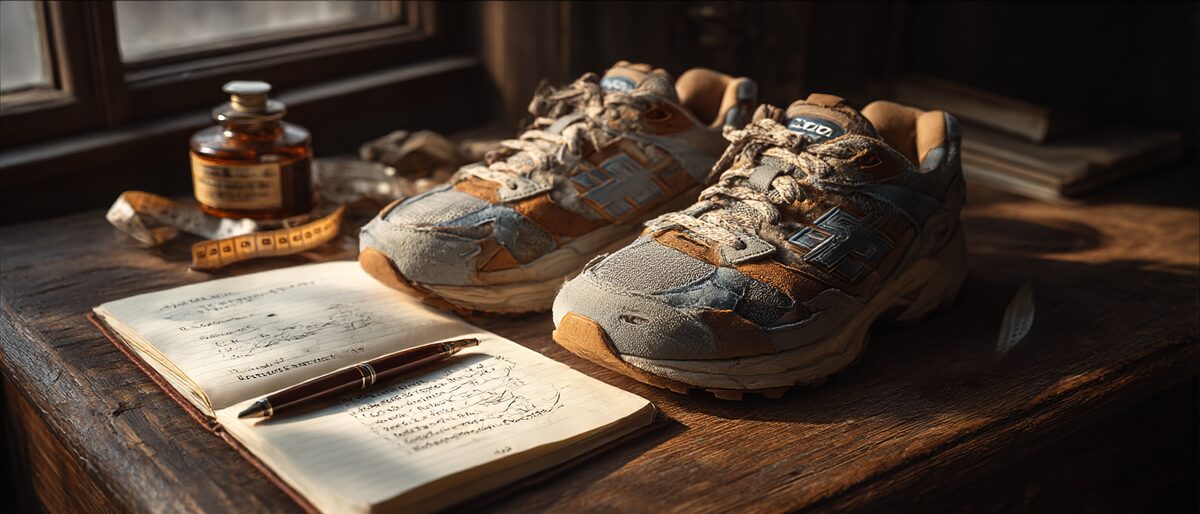
Running shoes do not last forever. The cushioning in the midsole gradually compresses with use, losing its ability to absorb impact even if the outsole and upper still look fine. Most running shoes last between 500 and 800 kilometres (roughly 300 to 500 miles), though this varies depending on your weight, your running style, and the surfaces you run on.
Signs that your shoes need replacing include a noticeable loss of cushioning (the shoes feel harder or flatter than when new), visible creasing or compression in the midsole foam, worn-through patches on the outsole, or a general sense that the shoes are no longer comfortable. Persistent new aches in your feet, shins, or knees can also indicate that your shoes have passed their useful life.
If you run regularly, tracking your mileage - either manually or through a running app - is the most reliable way to know when replacement is due. Waiting until the outsole wears through means you have been running on dead cushioning for some time.
Rotating Shoes - Why Serious Runners Own More Than One Pair
Shoe rotation means alternating between two or more pairs of running shoes rather than wearing the same pair for every run. There are practical reasons to consider this.
Different shoes serve different purposes. A cushioned shoe for long, easy runs. A lighter, more responsive shoe for faster sessions. A trail shoe for off-road days. Even if you only run on roads, alternating between two pairs allows each shoe's foam to decompress fully between runs, which can extend the life of both pairs.
Some research suggests that runners who rotate between multiple shoe types experience fewer injuries, possibly because the variation in sole geometry and cushioning changes the stress patterns on the body. This is not a universal finding, and plenty of runners do perfectly well with a single pair. But if you run frequently - more than three times a week - rotation is worth considering.
Choosing the Right Running Shoe for Your Level
| Runner Type | Recommended Shoe Category | Key Features to Prioritise |
|---|---|---|
| Complete beginner | Neutral road shoe, moderate cushioning | Comfort, good fit, moderate heel drop (6–10mm), breathable upper |
| Casual runner (a few times a month) | Neutral or mild stability road shoe | Comfort, durability, versatility, reasonable cushioning |
| Regular runner (3–5 times per week) | Category matched to gait and preferred surfaces | Cushioning appropriate to distance, consider rotating two pairs |
| Long-distance runner | Higher cushioning, matched to gait | Plush midsole, secure fit for swelling feet, proven durability |
| Trail runner (mixed terrain) | Trail shoe matched to terrain type | Appropriate lug depth, rock plate, reinforced upper, secure fit |
| Trail runner (mud and technical terrain) | Aggressive trail shoe | Deep lugs, waterproofing or quick-draining, stiff platform |
| Track athlete or competitive racer | Spikes or racing flats | Minimal weight, maximum responsiveness, event-appropriate spike configuration |
| Runner with overpronation | Stability shoe | Medial support features, structured midsole, firm but comfortable ride |
| Runner with supination | Neutral shoe with generous cushioning | Extra impact absorption, flexible outsole, cushioned midsole |
The Honest Limitations of Running Shoes
Running shoes are important, but they are not magic. No shoe will fix poor running form, compensate for overtraining, cure an existing injury, or make you faster simply by being on your feet. The marketing around running shoes - particularly around foam technologies, carbon plates, and cushioning innovations - can create unrealistic expectations.
A few honest realities worth keeping in mind:
Expensive does not always mean better for you. The most expensive shoes are designed for specific purposes - often race-day performance. A mid-range training shoe may suit you better for daily running. The price premium on high-end shoes often reflects advanced materials and marginal performance gains that matter to competitive runners but make little practical difference for recreational ones.
No shoe prevents injury. The right shoe can reduce injury risk by matching your biomechanics, but running injuries are caused by a complex mix of factors - training load, running form, muscle strength, flexibility, and recovery. Shoes are one piece of the puzzle.
Technology is not a substitute for progression. If you are new to running, gradually building distance and allowing your body to adapt matters far more than having the latest foam technology on your feet. Patience and consistency trump equipment every time.
Shoes that are wrong for you can cause problems regardless of price or quality. A top-of-the-range stability shoe on a neutral runner can feel awkward and even cause new discomfort. A minimal shoe on a heavy heel-striker can lead to calf and Achilles problems. Matching the shoe to your body is the point - not buying the most advanced model available.
Common Mistakes Runners Make When Buying Shoes
Buying Shoes That Are Too Small
This is the most common mistake. Running shoes need room for your feet to swell and your toes to spread. A snug fit that feels fine while standing in a shop can become painfully tight three kilometres into a run. Always size up from your everyday shoe size.
Choosing by Appearance Rather Than Fit
Running shoes need to work with your feet. Colour preferences and brand loyalty should come second to fit, comfort, and suitability. The best-looking shoe in the shop is irrelevant if it does not suit your foot shape.
Assuming All Shoes from One Brand Fit the Same
Different models from the same brand can fit very differently. A size nine in one model may feel quite different from a size nine in another. Try each model on its own merits.
Switching Shoe Type Too Quickly
Moving from a high-drop, cushioned shoe to a minimal, low-drop shoe - or vice versa - should be gradual. Your muscles, tendons, and joints adapt to the specific demands of your footwear over time. A sudden change can cause calf strain, Achilles problems, or other overuse injuries.
Running in Worn-Out Shoes for Too Long
The upper and outsole may look fine, but if the midsole cushioning has compressed, the shoe is no longer doing its job. Track your mileage and replace shoes at the appropriate interval.
Buying Trail Shoes When Road Shoes Would Do
If you run on pavements, treadmills, and smooth park paths, you need road shoes. Trail shoes on roads feel heavy, wear down quickly, and their aggressive lugs can be uncomfortable on hard, flat surfaces. Save trail shoes for actual trails.
Ignoring Width Options
If standard-width shoes feel tight across the forefoot, the answer is a wider shoe - not a longer one. Going up in length to gain width leaves you with excess room in the toe box and a loose fit everywhere else.
Your Pre-Purchase Checklist
Have You Identified Where You Run Most?
Road, trail, or treadmill - this determines the shoe category you need. If you split your time between surfaces, you may need more than one pair.
Do You Know Your Pronation Type?
If you have never had a gait analysis and you are experiencing recurring discomfort, consider getting one done. If your current shoes feel fine and you have no issues, your current shoe type is likely working for you.
Have You Measured Your Feet Recently?
Feet change over time - they can widen, lengthen, or change arch height, particularly after pregnancy, weight changes, or as you age. Measure both feet (they are often slightly different sizes) and buy for the larger foot.
Are You Buying the Right Size for Running?
Remember the thumb-width rule - space between your longest toe and the end of the shoe. Running shoes should be half a size to a full size larger than your everyday shoes.
Have You Checked Width Options?
If previous running shoes have felt tight across the front, look specifically for wide or extra-wide options. Not all models are available in wide fittings, so check before you fall in love with a particular shoe.
Do You Have a Realistic Budget?
Good running shoes are available at every price point. Mid-range shoes from established brands offer excellent value - you do not need the flagship model to get a well-made, comfortable running shoe. Previous-season models often offer identical performance at a reduced price.
Have You Checked the Returns Policy?
Especially if buying online. A generous returns window gives you the confidence to try shoes and send them back if the fit is not right. Look for retailers that allow returns even after a short test run.
Are You Replacing Worn-Out Shoes?
If your current shoes have covered 500–800 kilometres, the cushioning is likely compromised even if the shoes look fine externally. This is a valid reason to buy new shoes regardless of how the old ones appear.
Why Buying Through Amazon Makes Sense
Amazon carries an enormous range of running shoes from virtually every major brand, across all categories - road, trail, stability, neutral, and specialist. The breadth of choice means you can compare models, read thousands of customer reviews from real runners, and often find previous-season models at significantly reduced prices. For runners who already know their size and preferred model, Amazon frequently offers the most competitive pricing available.
The delivery and returns infrastructure is particularly valuable for running shoe purchases. If the fit is not right - and given the importance of fit, this happens - the returns process is straightforward. This makes Amazon a practical option even for first-time buyers who may need to try a couple of sizes before finding their match.
Amazon Marketplace Protections Explained
Amazon's A-to-Z Guarantee covers purchases made through the marketplace, protecting you if an item arrives damaged, is significantly different from its description, or does not arrive at all. This applies to running shoes bought from third-party sellers as well as those sold directly by Amazon.
Amazon Renewed offers pre-owned and refurbished running shoes that have been inspected and tested to work and look like new. Given that running shoes are a consumable that needs regular replacement, Renewed can be a cost-effective way to access premium brands - though always check the condition grade and return policy.
Fulfilled by Amazon (FBA) items are stored, packed, and shipped by Amazon's own logistics network, which typically means faster delivery and easier returns. Look for the "Fulfilled by Amazon" label when choosing between sellers for the same product.
Browse Running Shoes on Amazon
Buy on your local Amazon store