The Complete Guide to Sports First Aid and Injury Prevention — Kits, Supplies, and Being Prepared When It Matters
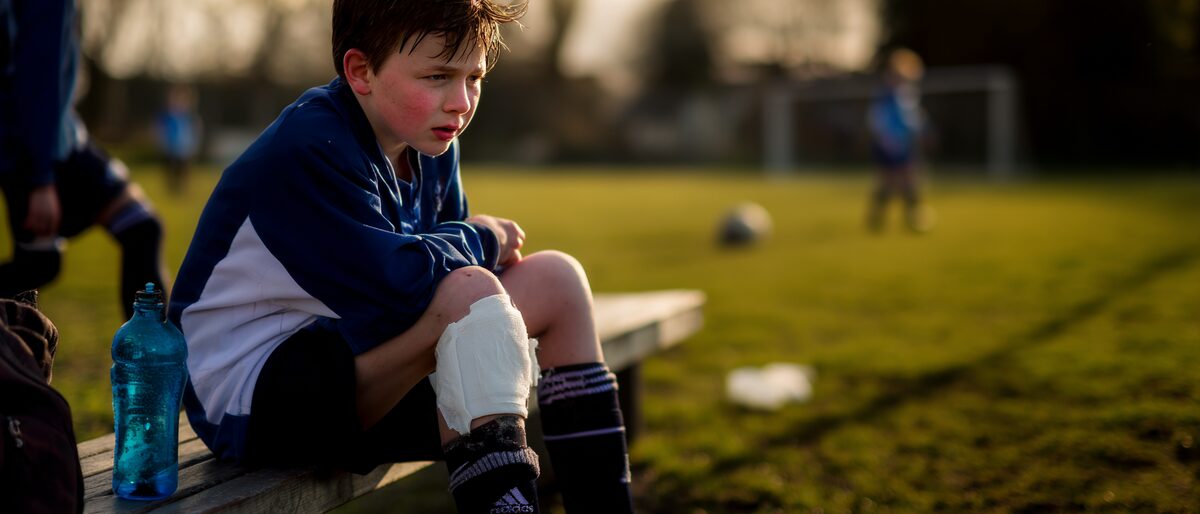
Every sport carries injury risk. A twisted ankle on a trail. A strained muscle during a warm-up. A collision on a pitch. A blister that ends a hike. Most sports injuries are minor — they require cleaning, cooling, compression, and common sense rather than emergency care. But having the right supplies immediately available transforms the outcome: a properly treated blister stays manageable; an untreated one ends the session. A cold compress applied in the first minutes of a sprain reduces swelling that would otherwise take days to resolve. This guide covers what belongs in a sports first aid kit, the supplies that matter across different activities, and the injury prevention tools that reduce the likelihood of needing the kit at all.
Browse Sports First Aid And Injury Prevention on Amazon
Every button routes to your local Amazon store automatically

Why Every Sports Kit Should Include First Aid
The difference between a minor injury that is managed on the spot and one that worsens through neglect is often a small, inexpensive supply applied at the right moment. A plaster and antiseptic on a cut. A cold pack on a knock. A compression bandage on a sprain. Tape on a vulnerable joint.
Most sports venues — gyms, pitches, courts, trails — have first aid supplies somewhere, but they may not be nearby, may not be well stocked, and may not include the specific items your activity requires. A personal sports first aid kit, tailored to your activity and carried in your bag, ensures you are prepared.
The Core Sports First Aid Kit
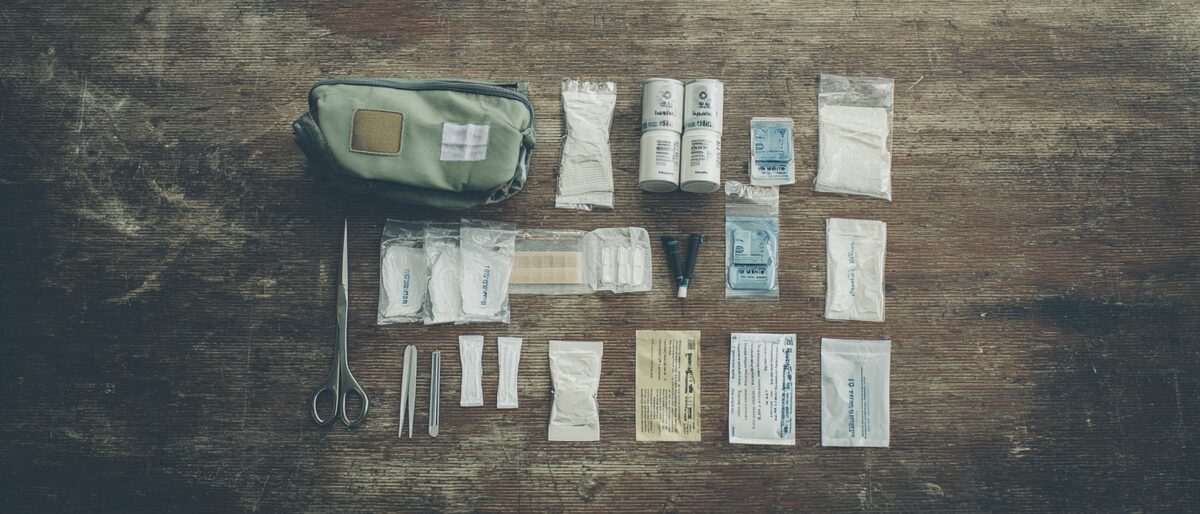
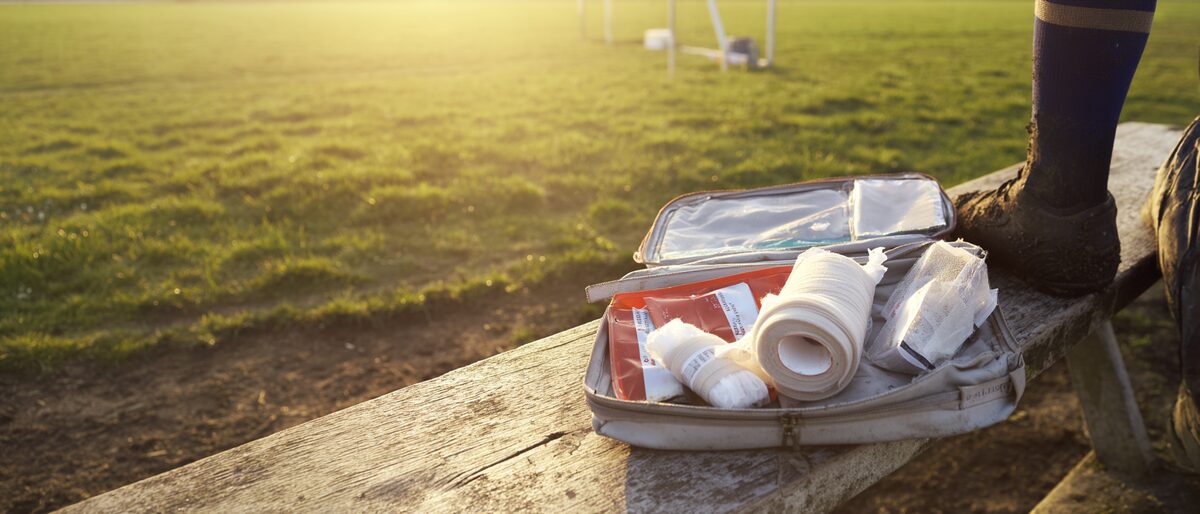
A basic sports first aid kit should contain:
Wound care: Adhesive plasters (assorted sizes), sterile wound dressings, antiseptic wipes, wound closure strips (butterfly strips), and sterile gauze pads.
Cold therapy: An instant cold pack (chemical activation — no freezer required) for immediate application to sprains, strains, and impact injuries.
Compression and support: An elastic cohesive bandage (self-adhering, does not require clips or tape), a triangular bandage (sling), and a crepe bandage.
Taping: Zinc oxide tape (rigid strapping tape) and elastic adhesive bandage for joint support and injury management.
Blister care: Blister plasters (hydrocolloid), a small pair of scissors, and moleskin or blister prevention tape.
Other essentials: Disposable gloves, tweezers (for splinters and debris), safety pins, a foil emergency blanket, and a small first aid instruction card.
Medications: Personal medication as required (asthma inhalers, allergy auto-injectors, etc.). Note: over-the-counter pain relief can be included but carries responsibility — only administer to yourself unless you are trained and authorised to assist others.
Wound Care
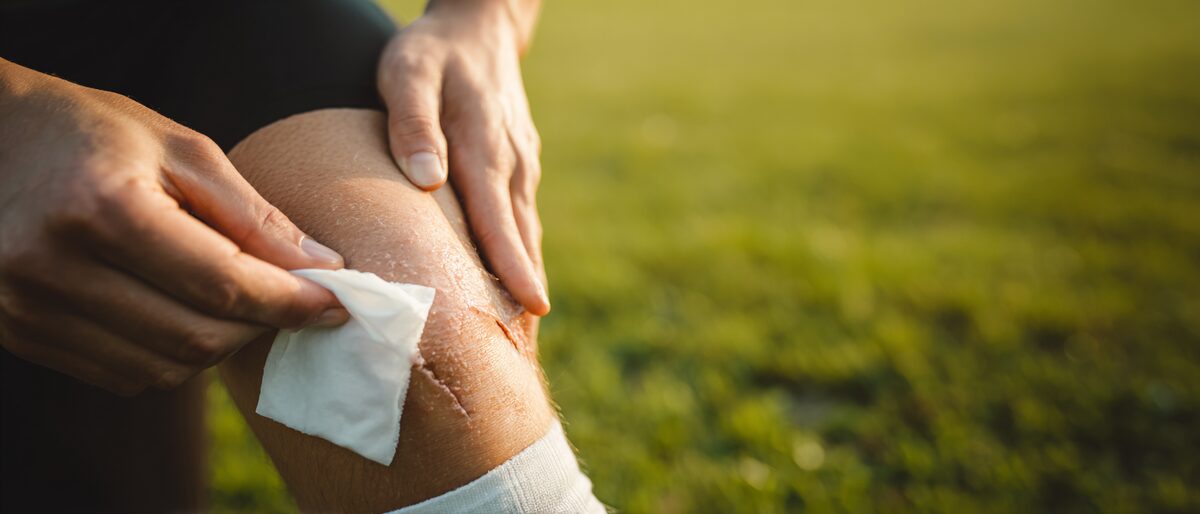
Most sports wounds are minor — cuts, grazes, and abrasions from falls, collisions, or equipment contact.
Clean the wound. Remove visible debris. Irrigate with clean water. Apply antiseptic wipe or solution.
Cover the wound. A plaster or dressing protects against further contamination and allows the wound to heal. Waterproof plasters maintain adhesion during sweaty or wet activity.
Wound closure strips hold the edges of a deeper cut together — useful when a cut is too large for a plaster but does not require stitches. They are not a substitute for medical attention if the wound is deep, gaping, or does not stop bleeding with pressure.
The PRICE Protocol
PRICE is the standard immediate treatment for soft-tissue injuries — sprains, strains, and contusions (bruises).
P — Protect. Stop the activity. Protect the injured area from further damage.
R — Rest. Rest the injury. Do not continue playing or exercising on it.
I — Ice. Apply cold (ice pack, instant cold pack, or cold water) to reduce swelling and pain. Apply for 15–20 minutes, with a cloth barrier between the ice and the skin to prevent ice burn. Repeat every two to three hours in the first 48 hours.
C — Compression. Wrap the injured area with an elastic bandage to reduce swelling. The bandage should be firm but not so tight that it restricts circulation (check for numbness, tingling, or colour change beyond the bandage).
E — Elevation. Raise the injured area above the level of the heart to assist drainage and reduce swelling.
PRICE is first aid, not treatment. If pain is severe, the joint is unstable, weight-bearing is impossible, or swelling is significant, seek professional medical assessment.
Taping and Strapping
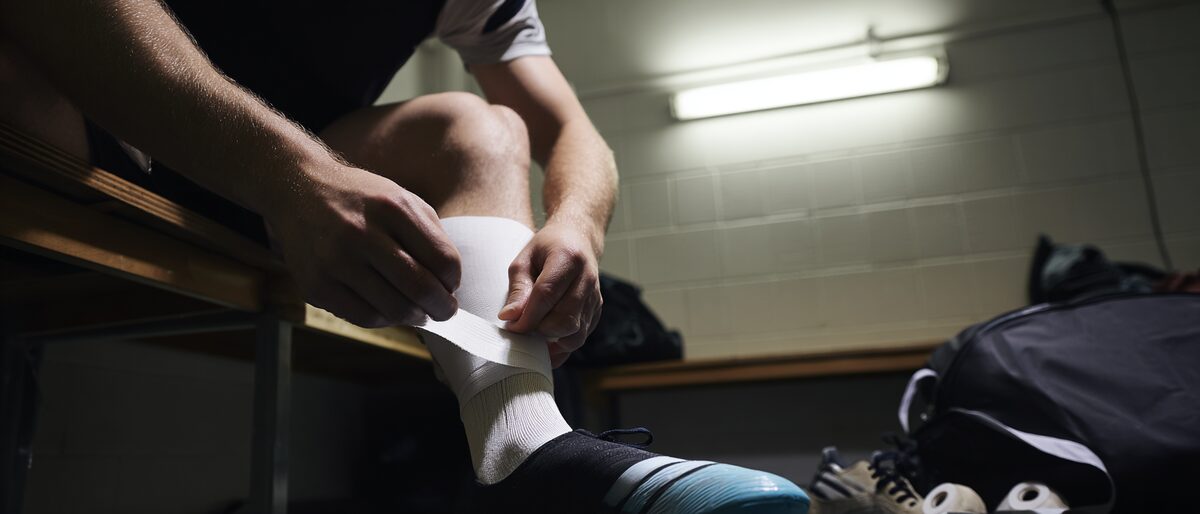
Athletic tape provides support to joints and soft tissue — either as a preventive measure (supporting a joint that is known to be vulnerable) or as management of an existing injury.
Zinc oxide tape is rigid, non-stretch tape used for structural support — ankle strapping, thumb support, and joint stabilisation. It restricts movement, which is the point — preventing the joint from moving into positions that cause pain or re-injury.
Elastic adhesive bandage (EAB) is stretchy tape used where some movement is needed but support is still required — knee support, muscle compression, and as a finishing layer over rigid tape.
Cohesive bandage sticks to itself but not to skin. It is used for compression, for holding dressings in place, and for quick-apply support wraps.
Pre-wrap (underwrap) is a thin foam layer applied to the skin before rigid tape. It protects the skin from irritation and allows easier tape removal.
Taping is a skill. Badly applied tape provides no support, restricts the wrong movement, or irritates the skin. Learn basic taping techniques from a physiotherapist, sports therapist, or reputable instructional resource. The supplies are inexpensive; the technique is what matters.
Blister Prevention and Treatment
Blisters are the most common sports injury and the most commonly undertreated. A developing blister ignored during a run, hike, or match becomes a debilitating problem within minutes.
Prevention: Well-fitting footwear, moisture-wicking socks, and anti-friction products (tape, lubricant, or blister-prevention patches applied to known hotspots before activity) prevent the majority of blisters. Prevention is always better than treatment.
Treatment: If a blister has formed, cover it with a hydrocolloid blister plaster (a cushioned, adhesive dressing that protects the blister while allowing it to heal). Do not burst the blister unless it is large and painful — intact skin over a blister is the best natural dressing. If a blister must be drained, use a sterile needle, drain the fluid, and cover with a sterile dressing.

Cold Therapy
Instant cold packs are chemical packs that become cold when activated by squeezing or bending. They require no refrigeration, making them ideal for a portable first aid kit.
Reusable gel cold packs are stored in a freezer and provide longer-lasting cold. They are impractical for a portable kit but useful for home recovery.
Cold spray provides immediate, short-duration cooling for acute pain — a quick spray on an impact site that allows the athlete to assess the injury. It does not replace sustained cold therapy from an ice pack.
Never apply ice or cold packs directly to the skin. Always use a cloth barrier. Direct contact can cause ice burn (frostbite) — damaging the skin while supposedly treating the injury beneath.
Heat Management
Heat packs (reusable or disposable) are used for chronic muscle tension, stiffness before activity, and warming cold muscles. They are not used on acute injuries (heat increases swelling in fresh injuries — cold is correct for the first 48–72 hours).
Muscle rubs and warming balms create a sensation of heat through ingredients that increase blood flow to the surface of the skin. They are popular for pre-activity preparation and for chronic stiffness. They do not provide deep-tissue warming despite the sensation.
Injury Prevention Tools
Beyond first aid, several equipment categories help prevent injuries before they occur.
Foam rollers and massage balls are covered in our recovery tools guide. They are used for myofascial release — breaking up muscle tightness and trigger points that can lead to injury if left unaddressed.
Resistance bands (covered in our resistance bands guide) are used in warm-up routines and rehabilitation exercises — strengthening the stabilising muscles around joints that are vulnerable to injury.
Ankle braces and supports — preventive supports worn during activity by athletes with a history of ankle sprains. They limit the range of movement that causes re-injury while allowing functional movement.
Knee supports — sleeve-type supports that provide compression and warmth to the knee joint. They do not prevent ligament injury but can reduce discomfort in joints with minor instability or arthritis.
Mouth guards — essential in contact sports and covered in our sport-specific guides. They protect teeth, gums, and jaw from impact.

Warm-Up and Cool-Down Equipment
The best injury prevention is a proper warm-up. Cold muscles are more vulnerable to strain than warm muscles.
Resistance bands for dynamic warm-up exercises — shoulder rotations, hip activations, and ankle mobility drills.
Foam rollers for pre-activity myofascial release.
Skipping ropes for cardiovascular warm-up (covered in our conditioning equipment guide).
The warm-up is not negotiable. It is the single most effective injury prevention strategy available, and it requires no equipment at all — just five to ten minutes of progressive movement before full exertion.
Kit Bags and Organisation
A first aid kit is only useful if it is accessible and its contents are organised.
A dedicated pouch or bag — separate from your main sports bag — keeps first aid supplies clean, dry, and easy to find in a hurry.
Transparent compartments or labelled sections allow you to locate specific items without emptying the entire kit.
Check your kit regularly. Replace used items, check expiry dates on antiseptics and cold packs, and replenish supplies before they run out. An empty first aid kit provides zero help.
Choosing Your Kit
| Your Activity | Kit Size | Priority Items |
|---|---|---|
| Gym / indoor training | Small personal pouch | Plasters, tape, cold pack, blister plasters |
| Running / hiking | Belt or backpack pouch | Blister care, cold pack, compression bandage, antiseptic |
| Team sport (pitch) | Medium team kit | Multiple cold packs, tape (zinc oxide + EAB), bandages, wound care |
| Outdoor / remote activity | Comprehensive kit | Full wound care, splint, foil blanket, whistle, personal medication |
| Children's sport | Small kit in bag | Plasters, antiseptic wipes, cold pack, comfort items |
The Honest Limitations
A first aid kit manages minor injuries. It does not replace medical care. Any injury involving loss of consciousness, suspected fracture, joint instability, significant bleeding, or severe pain requires professional medical assessment.
First aid supplies are only useful if you know how to use them. A basic first aid course — available from national organisations in most countries — teaches wound management, the PRICE protocol, basic taping, and when to seek further help. The course is a more valuable investment than any piece of equipment.
Taping without technique is ineffective. Wrapping tape around an ankle does not provide support unless the tape is applied in the correct pattern with the correct tension. Learn before you tape.
Common Mistakes Buyers Make
Carrying a kit but never checking it. Used items are not replaced, cold packs expire, and the kit is empty when needed.
Not carrying blister prevention supplies. Blisters are predictable and preventable. Waiting until one forms to address it is avoidable.
Applying heat to an acute injury. Heat increases swelling in fresh injuries. Cold is correct for the first 48–72 hours.
Over-relying on supports and braces. Wearing an ankle brace permanently without strengthening the ankle creates dependence on the brace. Supports are for management; rehabilitation is for resolution.
Not completing a first aid course. The supplies are only as useful as the person using them.
Your Pre-Purchase Checklist
- [ ] Does the kit contain wound care basics (plasters, antiseptic, dressings)?
- [ ] Does the kit include an instant cold pack?
- [ ] Do you have compression bandages?
- [ ] Do you have blister prevention and treatment supplies?
- [ ] Do you have athletic tape appropriate for your sport?
- [ ] Is the kit organised, portable, and regularly checked?
Why Buying Through Amazon Makes Sense
Amazon carries sports first aid supplies from medical and sports brands. Customer reviews are valuable for assessing kit completeness (many pre-packed kits skimp on key items), tape adhesion quality (cheap tape peels off during activity), cold pack duration, and blister plaster durability under sweaty conditions. Buying individual components to build a custom kit is often more effective than relying on a generic pre-packed set.
The best first aid kit is the one you never need. The second best is the one you carry, check regularly, and know how to use. A plaster applied in the first minute prevents an infection. A cold pack applied in the first five minutes reduces swelling that would otherwise last a week. Tape applied before the game protects a joint that would otherwise re-injure. Preparation is the cheapest, lightest, and most effective piece of sports equipment you will ever carry.
Browse Sports First Aid And Injury Prevention on Amazon
Every button routes to your local Amazon store automatically